
Should You Choose a Minimal or Maximal Kitchen Design?
Part 1: Minimal
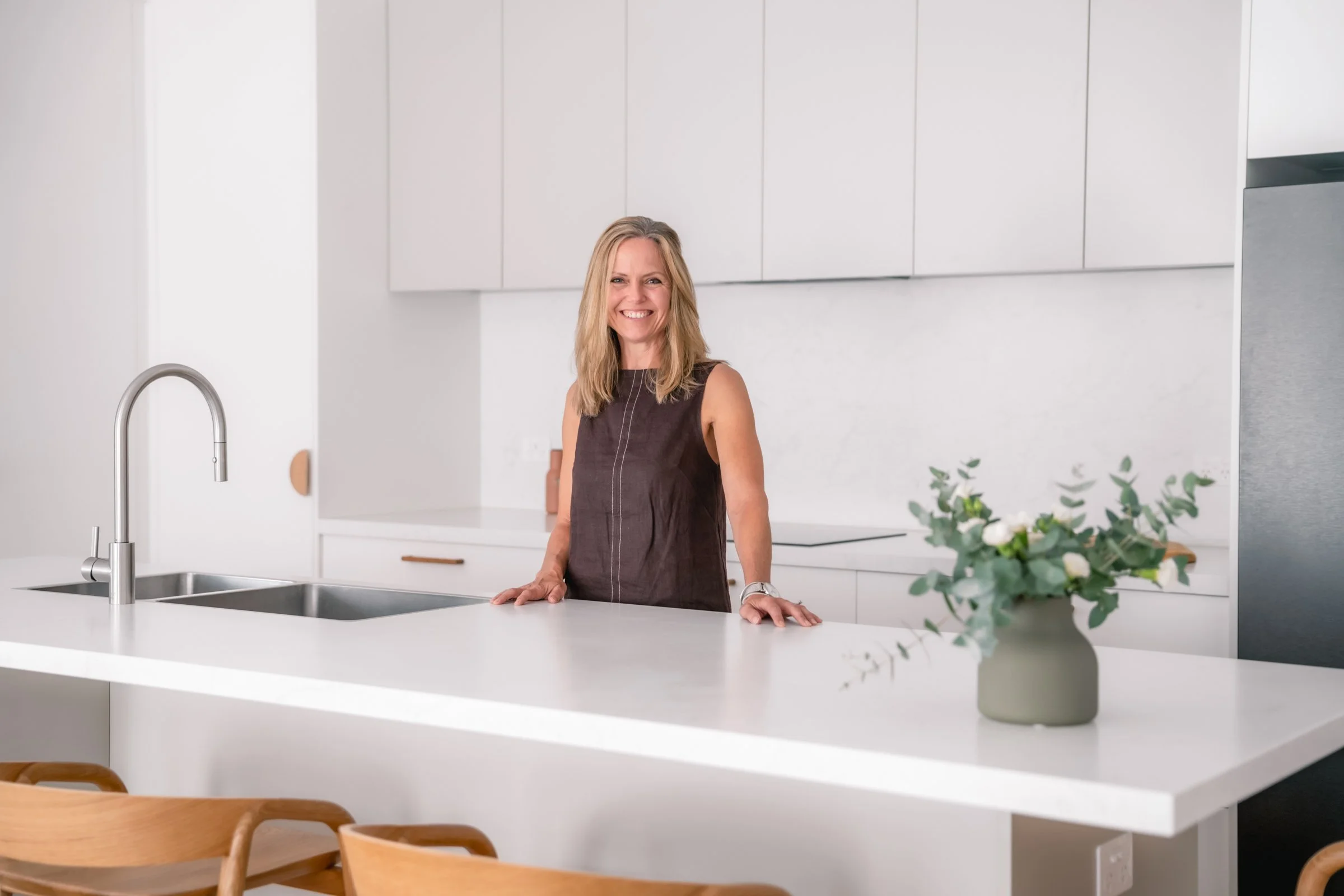
A minimal kitchen design is often misunderstood.
It does not mean empty. It does not mean cold. And it definitely does not mean removing all personality from the room.
For many families, a minimal kitchen is the better choice because it gives daily life more breathing room. The surfaces feel calmer. The storage works harder. The layout is easier to move through. And in an open-plan home, the kitchen can sit comfortably alongside the dining and living spaces without visually taking over.
That matters because family kitchens have to do a lot. They need to handle school mornings, lunchboxes, coffee, cooking, homework, guests, groceries, chargers, appliances and the inevitable things that get dropped on the bench at the end of the day.
A good minimal kitchen does not ignore all of that. It plans for it.
Here are some of the reasons homeowners choose a minimal kitchen design, and how recent Smith & Smith projects show what that looks like in real homes.
Minimal design makes the room feel calmer
One of the biggest benefits of a minimal kitchen is visual calm.
In a busy family home, the kitchen is rarely just a kitchen. It often connects to the dining area, the lounge, the hallway or even the outdoor entertaining space. If the kitchen feels cluttered or visually heavy, that feeling travels into the rest of the home.
That was a key part of the AVALON kitchen. The space needed to work incredibly hard, incorporating a Euro laundry and a large amount of utility storage, but the kitchen still needed to feel calm because it sat in the middle of the home.
The solution was not to make everything white and featureless. It was to hide the right things. The washing machine and dryer stack were fully concealed. Utility appliances and products were tucked into a dedicated corner cabinet. The cookbooks were hidden away. When the doors are closed, the kitchen looks clean and relaxed, even though it is doing much more behind the scenes.
That is the real advantage of minimal design. It does not ask you to own less or live unrealistically. It simply gives everything a place, so the room can stop showing you every task at once.
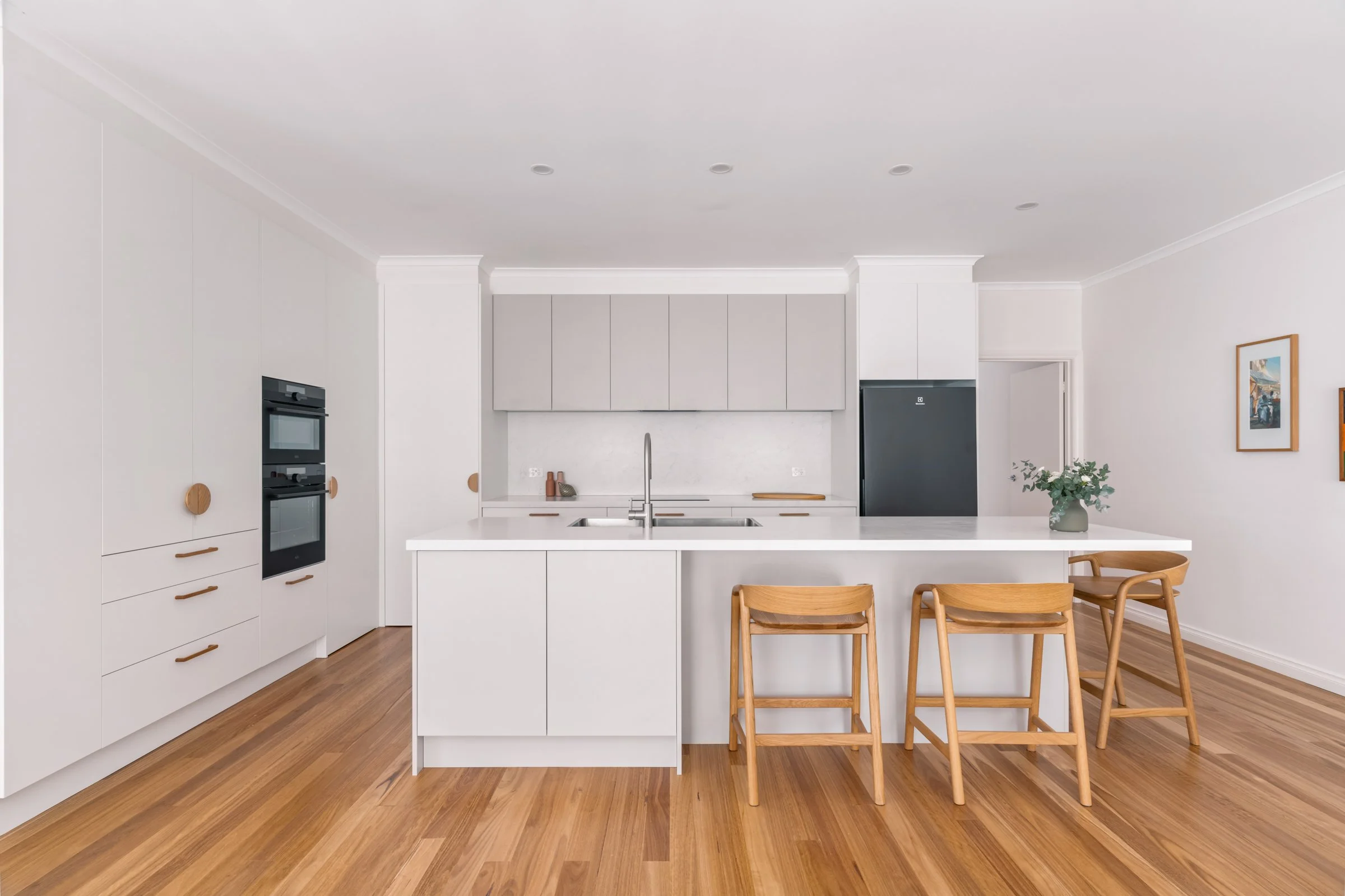
AVALON seamlessly incorporates a Euro laundry in a vertical cupboard that passes for a pantry
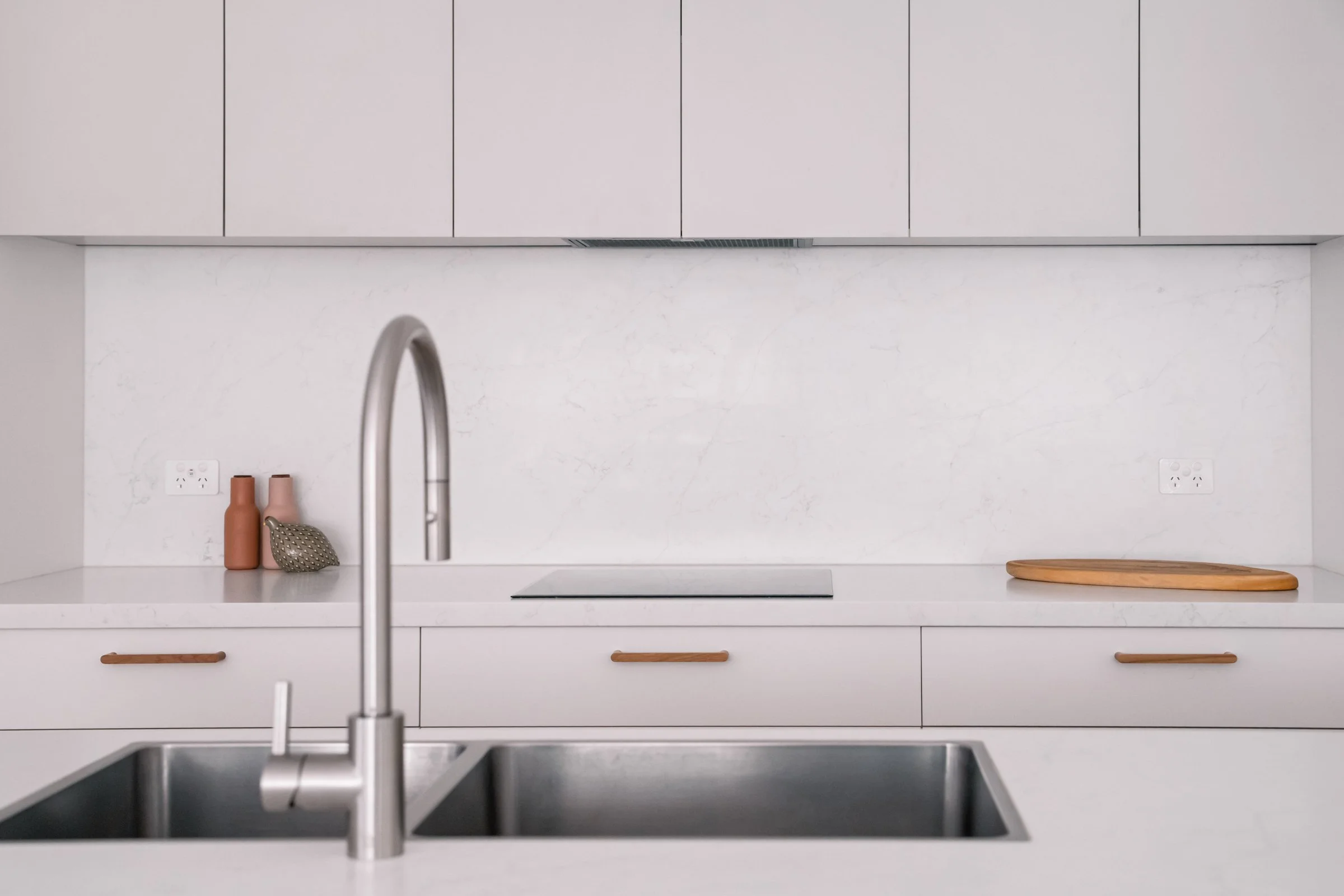
In AVALON, the solution was not to make everything white and featureless - it was to hide the right things
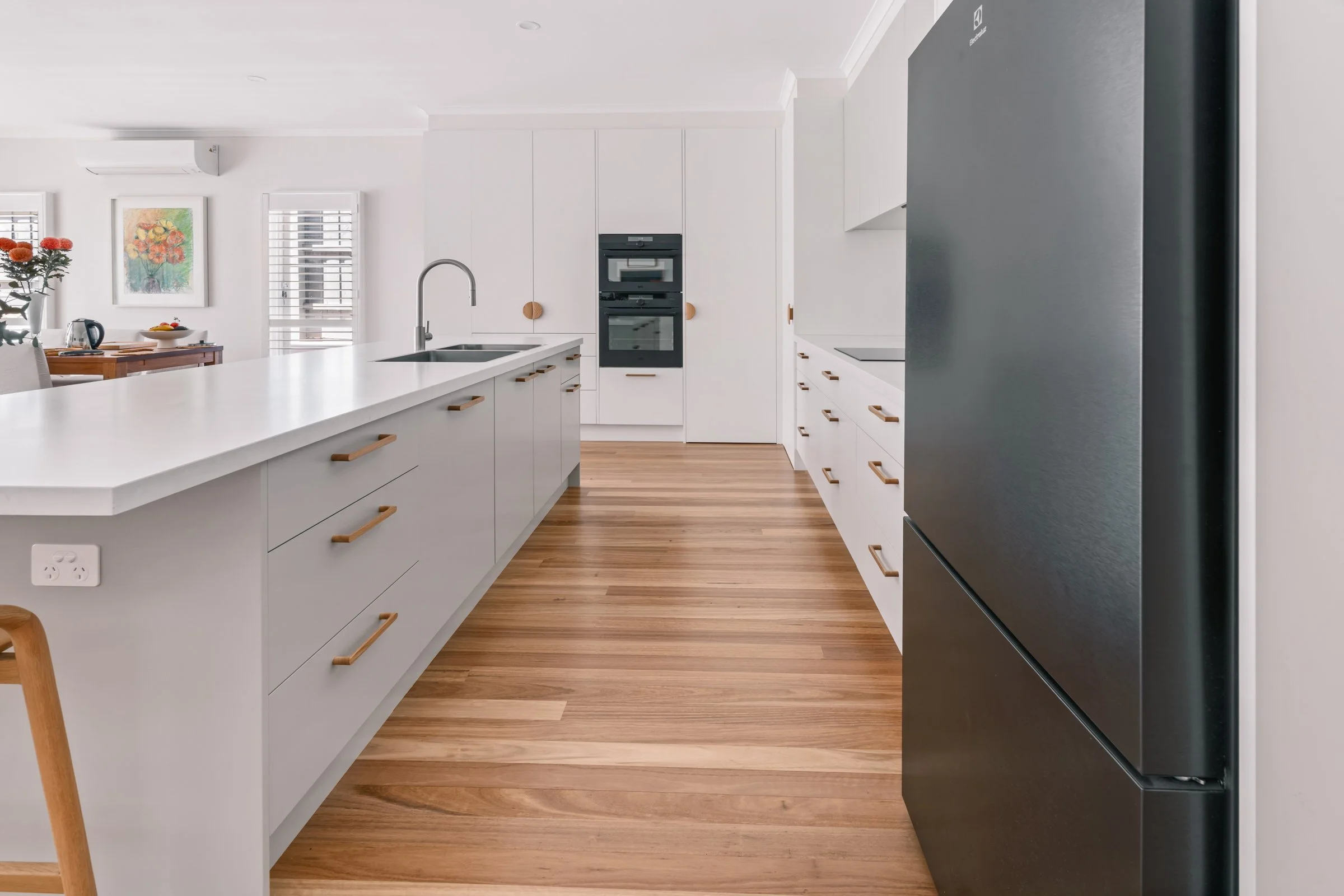
Smith & Smith designer Beth worked with the homeowners of AVALON to create function and flow that suits how this family likes to live
Minimal kitchens improve flow
A minimal kitchen is not just about the way it looks. It is also about the way people move.
In the CORBY kitchen, the homeowners already had plenty of space, but the room was not working well. The high breakfast bar blocked sightlines. Stools sat in the walkway. The kitchen was cut off from the veranda, even though the home had a beautiful outdoor connection waiting to be used.
Instead of adding more, the design improved what was already there.
The blocked window became a door to the veranda, linking kitchen, dining and lounge in one move. The front island was designed to face the dining table, so the person cooking could stay part of the conversation. A second prep island brought the sink, ovens and fridge into a more intuitive working zone.The result is a kitchen that feels bigger without adding square metres.
This is where minimal design can be especially useful. By removing visual and physical obstacles, the room becomes easier to use. There are fewer traffic jams, fewer awkward corners and fewer moments where someone has to step aside just so another person can open a drawer.
For a family kitchen renovation, that kind of ease matters more than decoration.
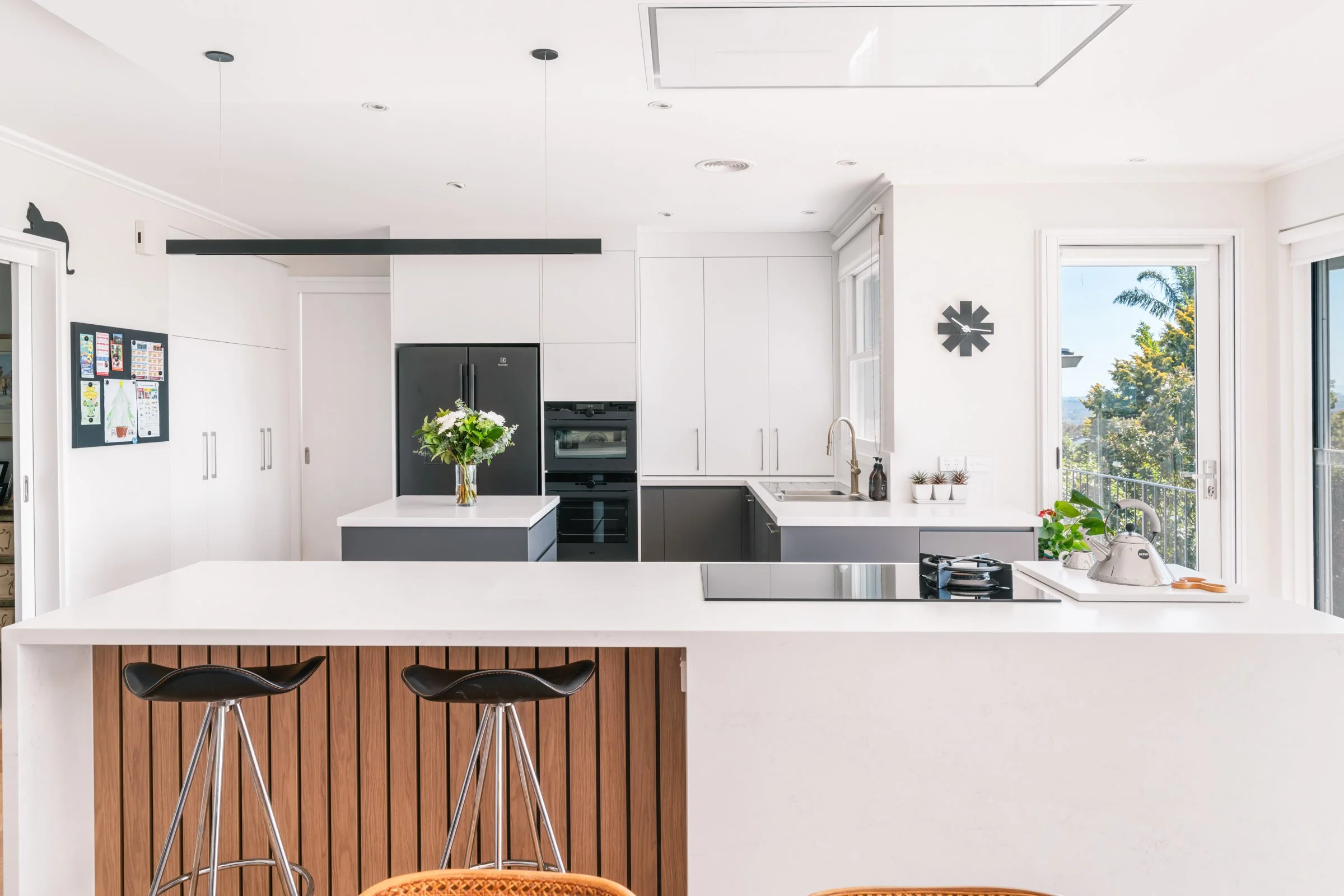
In CORBY the blocked window became a door to the veranda, linking kitchen, dining and lounge in one move.
Minimal design gives storage a quieter role
A maximal kitchen often celebrates what is on show: shelves, collected objects, feature hardware, display cabinets and decorative layers.
A minimal kitchen takes a different approach. It asks what should be seen, and what should simply work quietly in the background.
In STANLEY, the kitchen was designed around a three-metre island, with drawers and cupboards on both sides. That decision unlocked around 40 per cent more storage without making the footprint feel bulky. Hidden behind the cooktop wall is a walk-in pantry, giving the family a place to keep day-to-day mess out of view from the kitchen.
In HOLT, the original apartment kitchen lacked useful storage, so one of the smartest additions was an appliance pantry at the end of the peninsula. The kettle, toaster and blender all have a home. They are easy to reach when needed, then easy to hide when the kitchen becomes an entertaining space.
This is one of the clearest reasons to choose a minimal kitchen. It can make a room feel tidier without relying on constant tidying.
The storage is still there. In many cases, there is more of it. But it is planned so that the main kitchen can stay composed.
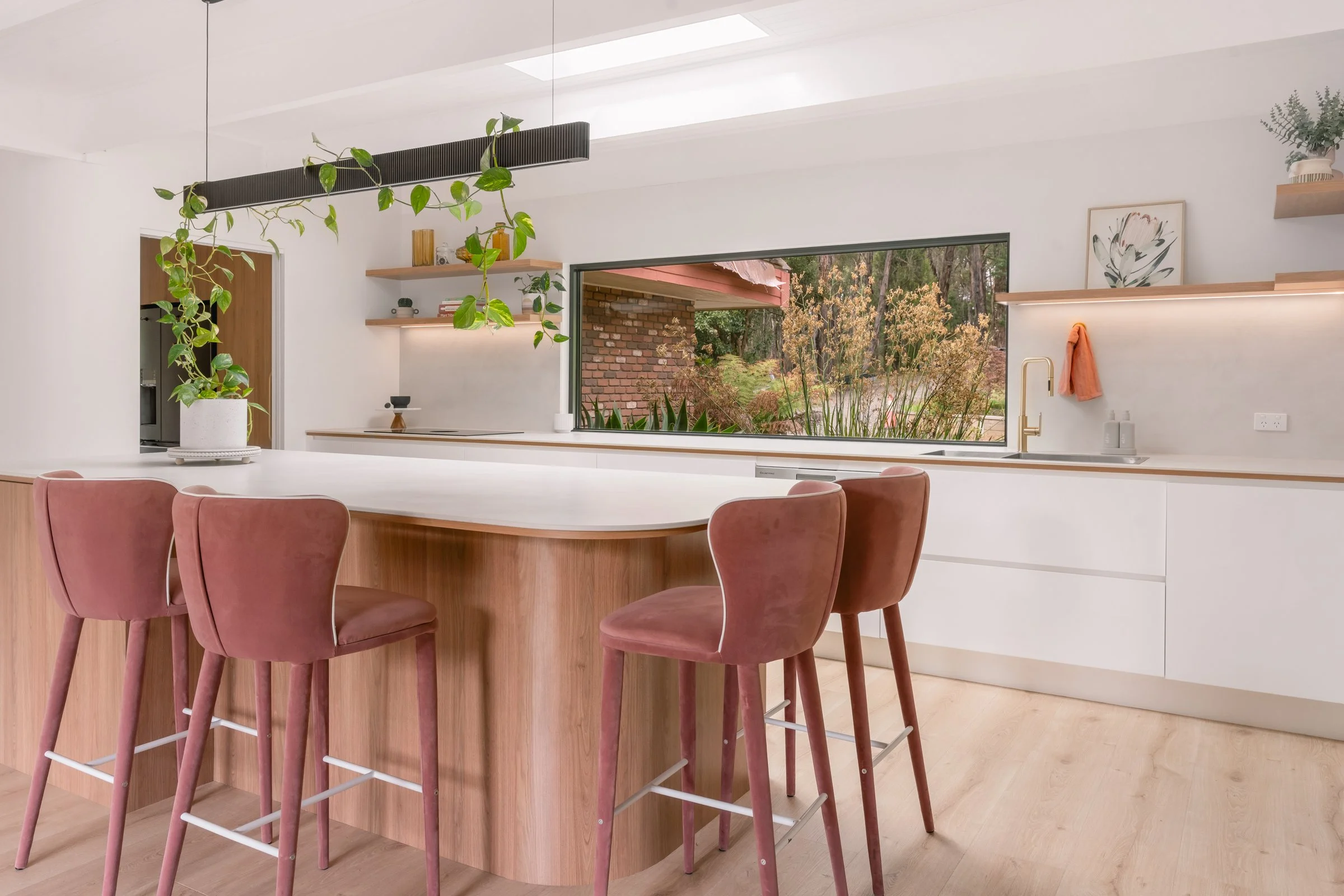
STANLEY’S island bench employs deep drawers to keep ample storage out of site
Minimal does not mean plain
Some homeowners worry that a minimal kitchen will feel too simple or too safe. But minimal design still allows for warmth, colour and personality.
The difference is restraint.
In BLAZEY, the kitchen has a strong point of view, but it is not visually overloaded. The overhead cabinetry reads as a clean horizontal band. A curved shelf creates contrast. The wall space beside it is intentionally quiet, with a round light used as a simple punctuation point. That balance of lines, curves, positive space and negative space gives the kitchen its calm.
The material palette also does a lot of work. The design moved away from green overheads and landed on muted earthy browns for a warmer, quieter feel. Floating timber shelves add function, but they also create a moment of softness and display.
Minimal design works best when each feature has a reason for being there. A timber shelf. A curved bench. A quiet wall. A soft green cabinet. A stone that does not compete with the art. These are not boring choices. They are edited choices.
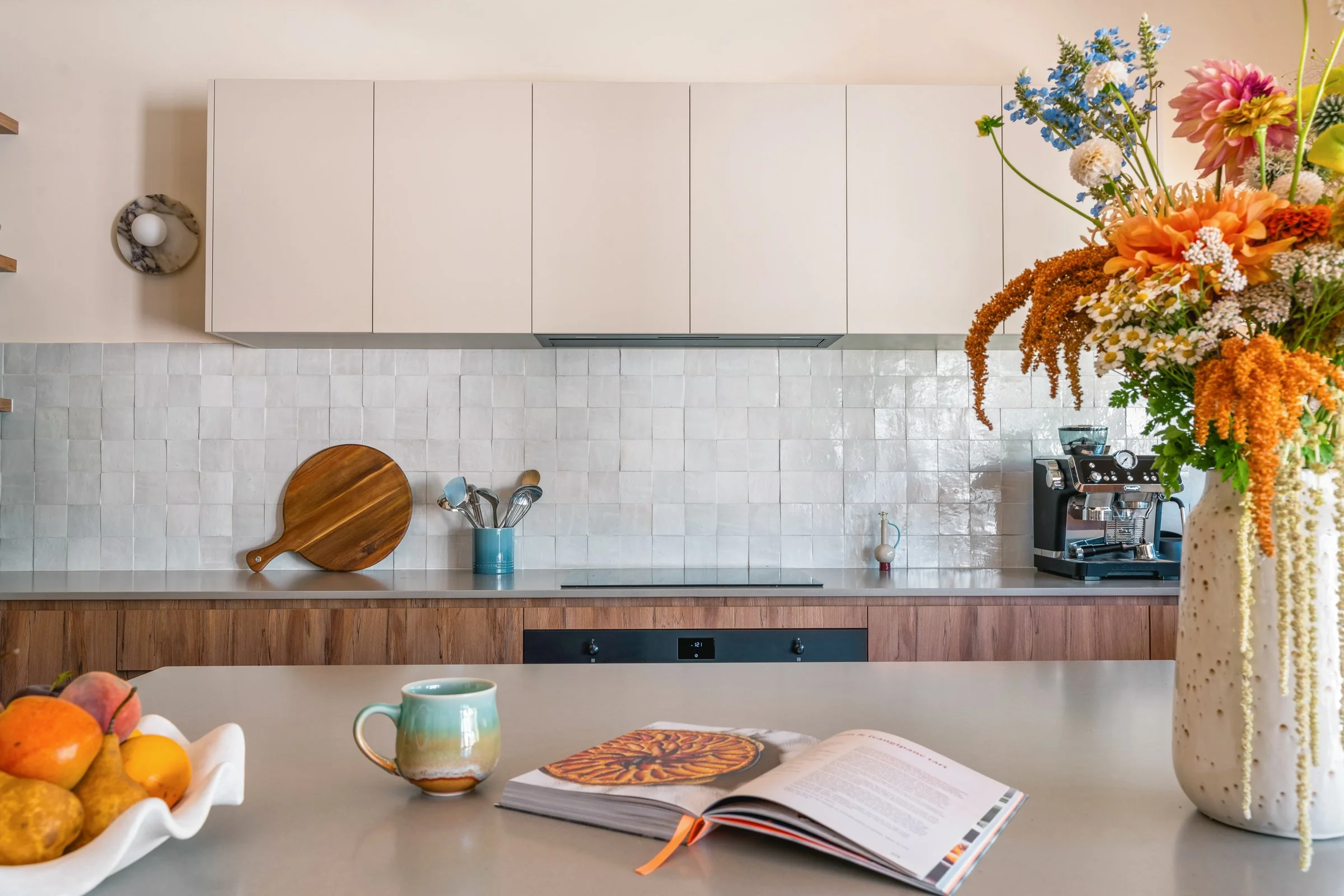
Calm but full of detail and texture: BLAZEY’S tonal tiled splashback and timber cabinetry.
Minimal kitchens can still feel warm
A minimal kitchen should not feel like a showroom that no one is allowed to touch.
That is why timber, soft colour, texture and lighting are so important.
In STANLEY, floating shelves in a warm walnut finish connect to the darker timber floor, while bright white cabinetry keeps the room fresh. In HOLT, deep green laminate is paired with American Oak benchtops and timber pulls, creating a small-footprint kitchen that feels warm rather than stark. In AVALON, soft green cabinetry, timber handles and a veneer wine cabinet bring character into a highly practical open-plan kitchen.
These choices matter because minimal design needs balance. Too many finishes can make a room feel busy. Too few can make it feel flat.
The right minimal kitchen sits somewhere in the middle. It feels clean, but still human. Practical, but not cold. Calm, but not empty.
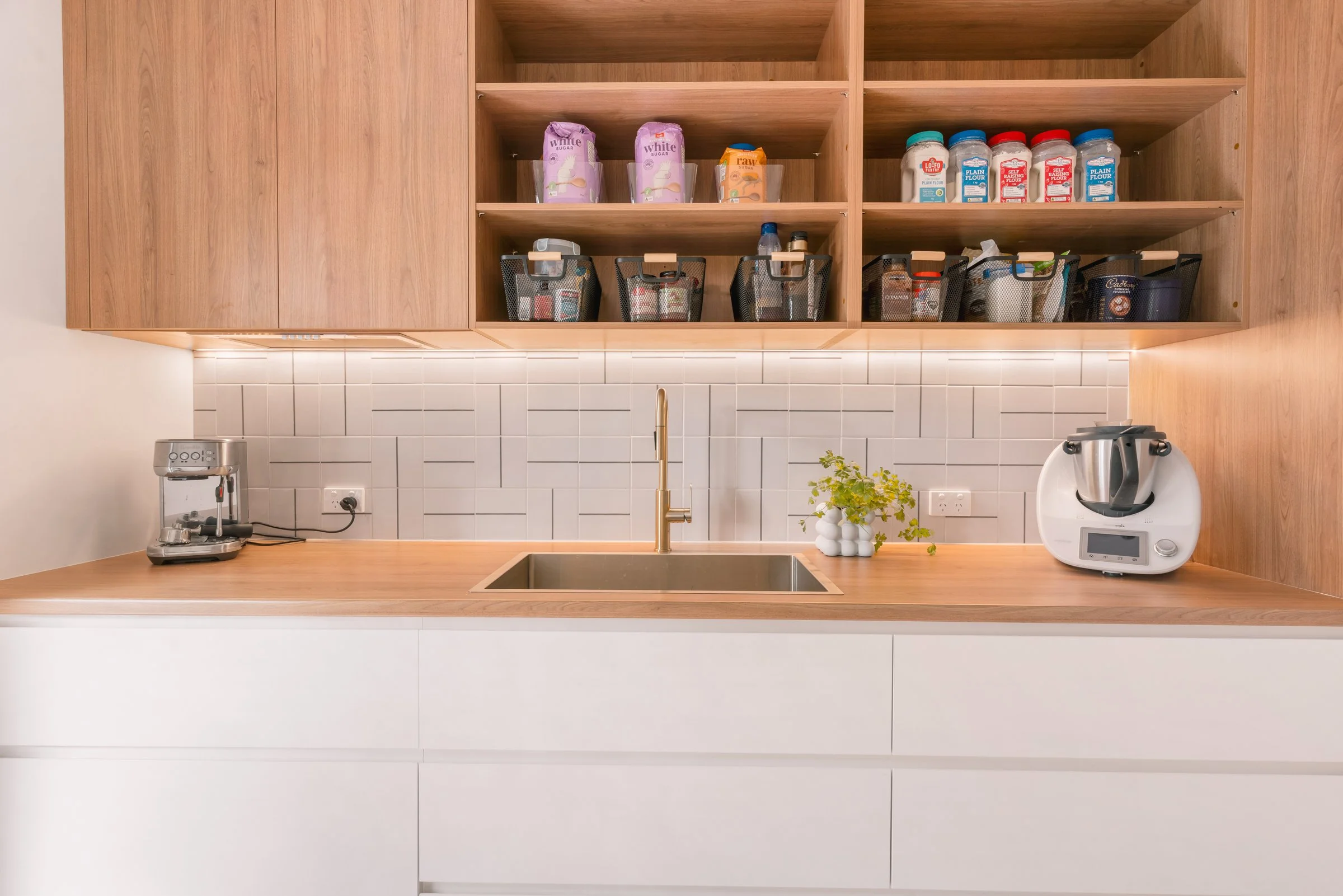
STANLEY’S floating shelves in a warm walnut finish connect to the darker timber floor
Minimal design makes entertaining easier
A kitchen for entertaining does not always need to be dramatic. Sometimes, it simply needs to work without making the host feel trapped behind the bench.
In CORBY, the kitchen was redesigned around conversation, cooking and circulation. The cooktop and seating were positioned so the cook could stay connected to guests. The veranda connection made entertaining flow from inside to outside. Storage details such as oil and spice pull-outs, tray dividers, inner drawers and appliance storage meant the everyday items had a place to disappear.
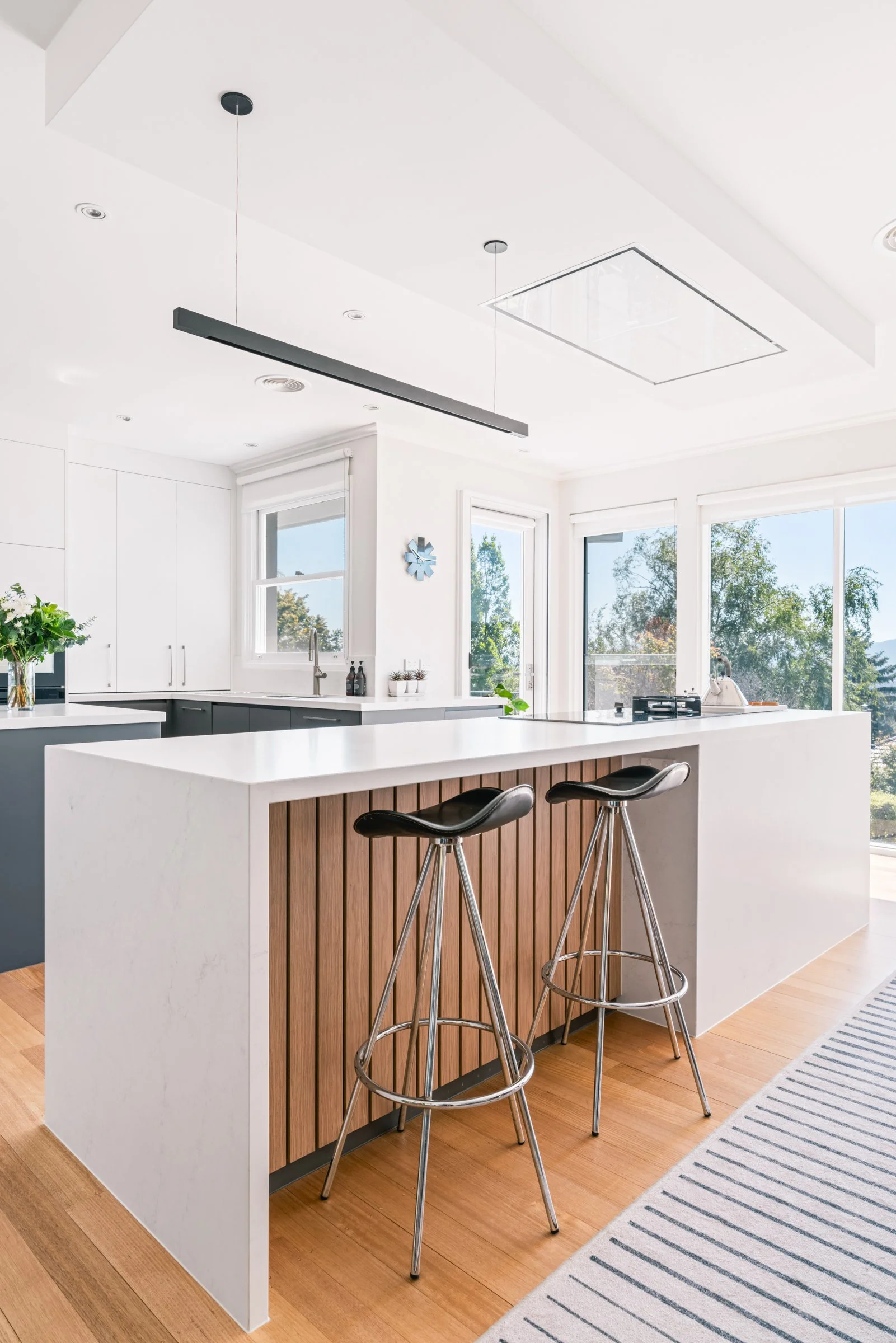
CORBY’S island bench is designed to bring the entertainment to the chef.
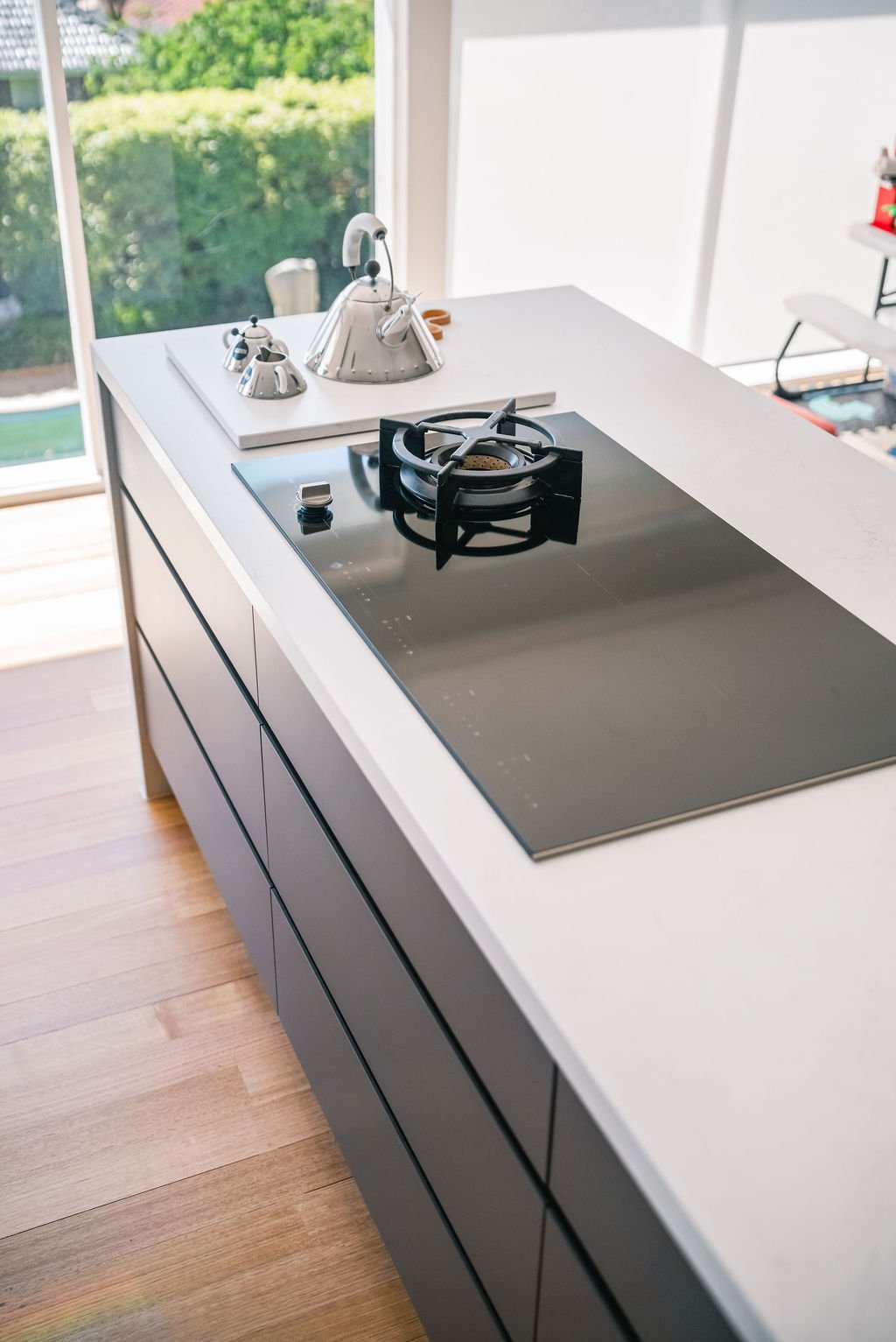
CORBY’S storage details include oil and spice pull-outs, tray dividers, inner drawers and appliance storage - meaning everyday items disappear
In AVALON, the dining-side cabinetry was designed to make entertaining easier, with wine, liquor and glassware accessible without needing to enter the main cooking zone.
That is a major benefit of minimal kitchen design: it can separate the visible experience from the working mess. Guests see calm surfaces, good lighting and a room that feels easy to gather in. The practical details are still there, but they are not fighting for attention.
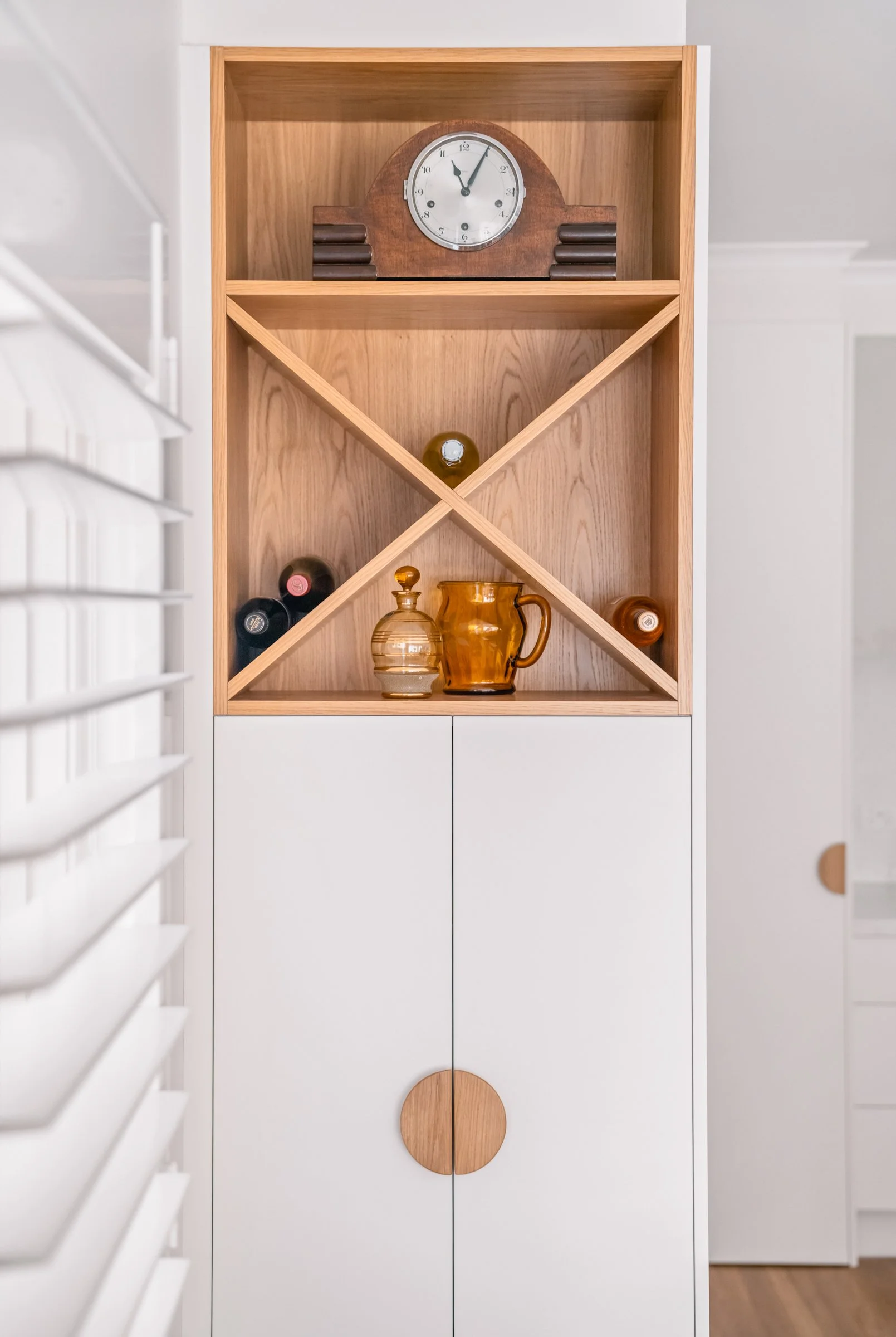
In AVALON, the dining-side cabinetry was designed to make entertaining easier
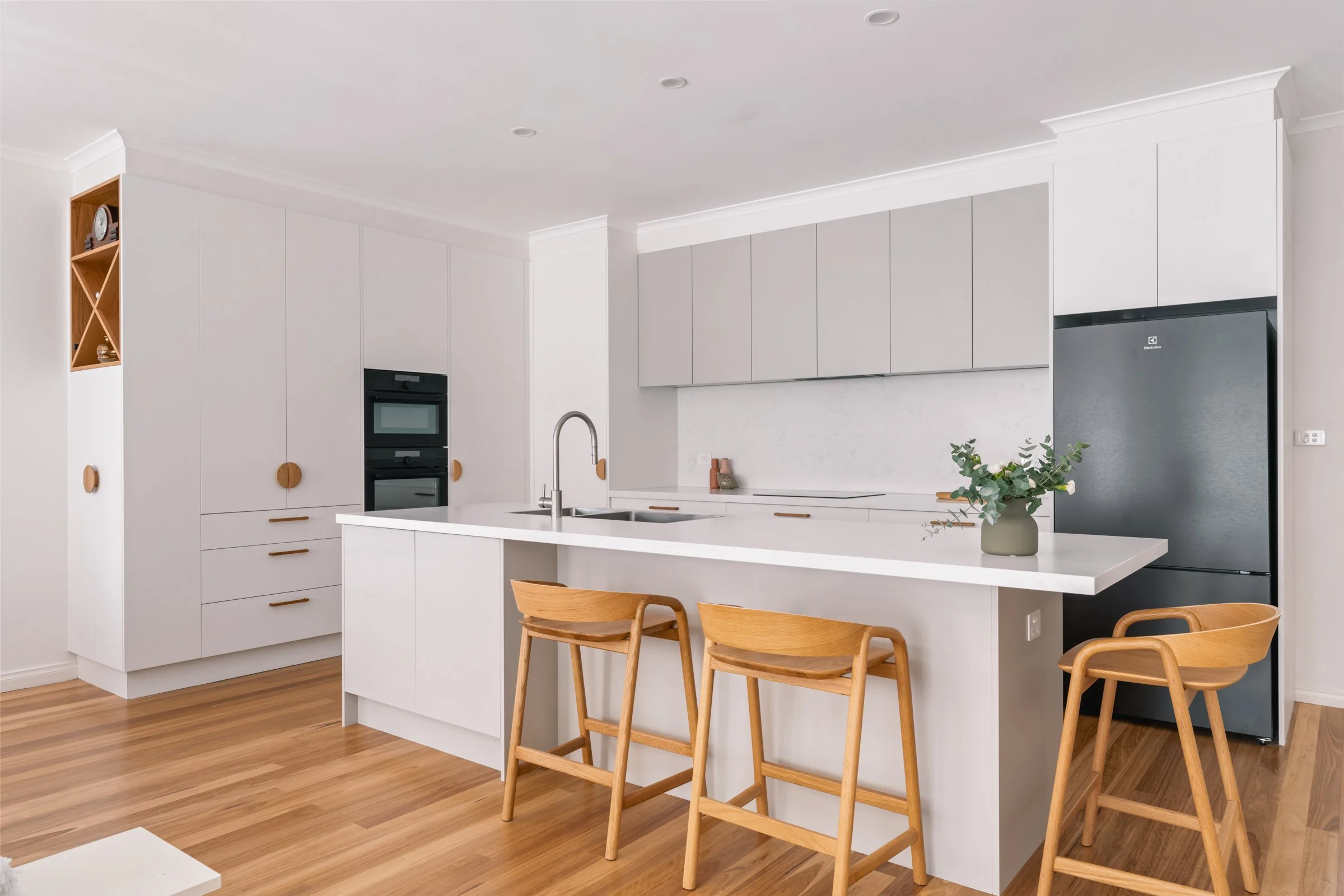
AVALON’S Island bench seating creates a multi-use cooking and entertaining space
Why choose minimal over maximal?
A maximal kitchen may be right for a homeowner who loves layers, pattern, display, detail and strong decorative moments.
A minimal kitchen is often the better choice when the goal is calm, clarity and everyday ease.
It suits open-plan homes where the kitchen needs to connect with living and dining areas. It suits families who need more storage, but do not want the kitchen to feel heavy. It suits smaller spaces where every design decision needs to earn its place. And it suits homeowners who want a kitchen that can work hard without looking constantly busy.
In the end, minimal design is not about having less kitchen.
It is about having less friction.
Less visual noise. Less bench clutter. Less zig-zagging between zones. Less feeling like the room is always demanding something from you.
A well-designed minimal kitchen gives that energy back. It creates a space where morning coffee feels easier, entertaining feels more natural, and the kitchen feels like part of the home rather than a task sitting in the middle of it.
If your current kitchen feels busy, blocked or harder to use than it should, minimal design may be the right place to start. The question is not “How do we make this kitchen plain?” The better question is: “What can we simplify so daily life feels better?”
Are you learning more ‘min’ than ‘max’? Speak to a member of our award-winning team to find a design solution that works for how your family likes to live.
Join us next month in The Smith’s Journal the features and benefits of a maximal kitchen design.