Part 2: Maximal
While Minimal kitchen design creates calm through careful editing, maximal kitchen design creates richness through careful curation.
For some homeowners, simplicity is not the ultimate goal. They want a kitchen with presence: one that expresses personality, celebrates craftsmanship and gives treasured materials, objects and architectural details room to be noticed.
That does not mean filling every surface or adding decoration without purpose. The most successful maximal kitchens are highly considered. Colour, texture, lighting, joinery and display are layered deliberately, with each choice contributing to the mood of the room and the way it supports everyday life.
A maximal kitchen may draw on the warmth of a traditional farmhouse, the symmetry of Art Deco, the drama of natural stone or the generosity of a second kitchen designed for entertaining. The individual features may differ, but the advantage is the same: the room feels deeply personal.
Here are some of the ways recent Smith & Smith projects demonstrate the benefits of maximal kitchen design.
A minimal foundation can still support maximal personality
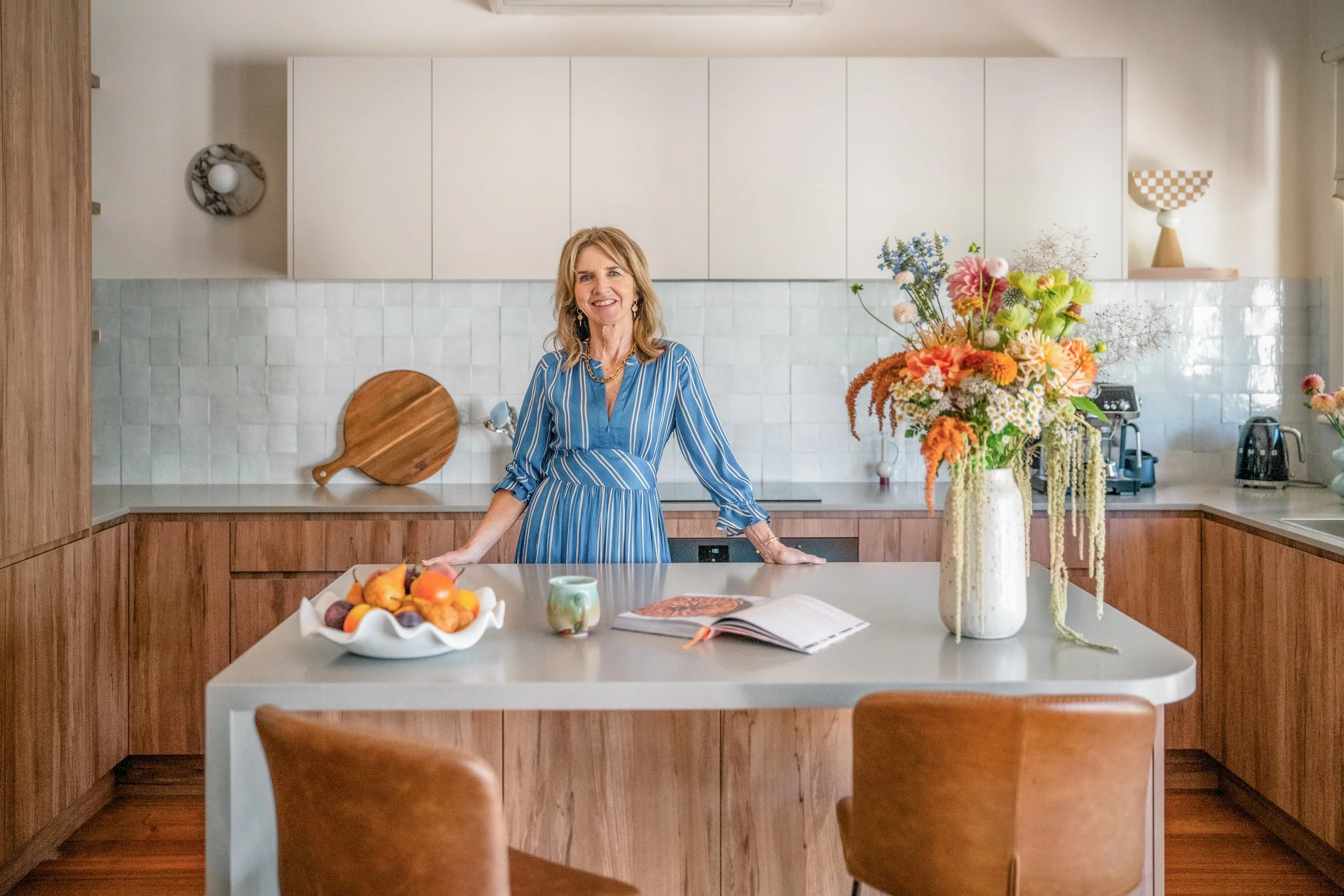
BLAZEY shows that minimal and maximal ideas can exist within the same kitchen.
Its streamlined, handleless timber cabinetry creates a calm architectural base, but the wider composition is anything but anonymous. The design plays confidently with lines and curves: a horizontal band of overhead cabinetry is balanced by a solitary curved shelf, while an intentionally quiet wall is punctuated by a round light.
That use of positive and negative space gives the kitchen clarity while leaving room for the homeowner’s collection of colourful, 1980s Memphis-inspired homewares to become part of the design.
Floating timber shelves provide practical everyday storage, but they also create a place for objects, colour and personality. Muted earthy finishes keep the overall palette grounded, allowing the more expressive elements to stand out without overwhelming the room.
BLAZEY demonstrates that maximalism does not require every surface to be decorative. Sometimes, a restrained backdrop is exactly what allows bold shapes, collected pieces and a strong personal point of view to have greater impact.
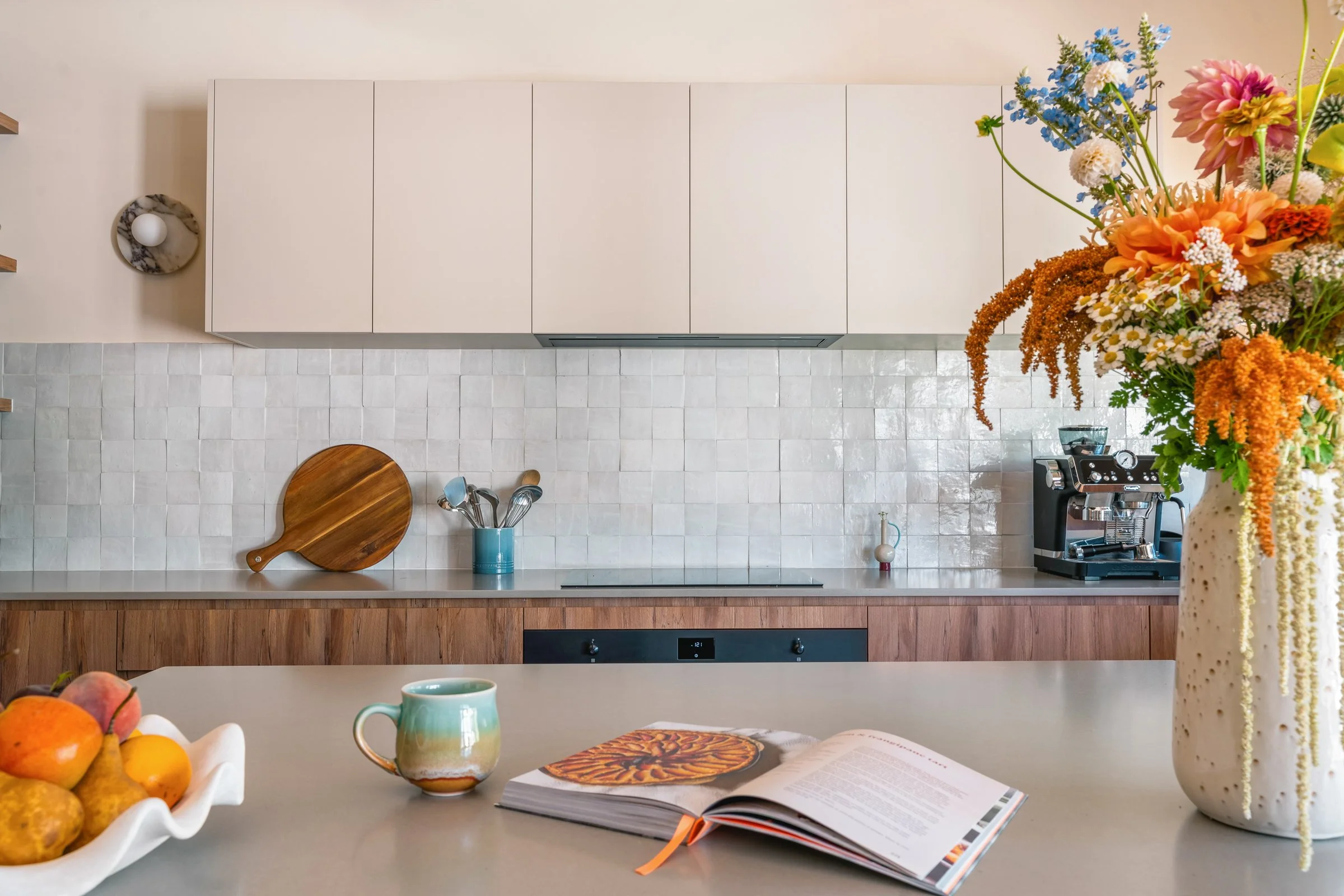
BLAZEY demonstrates that maximalism does not require every surface to be decorative.
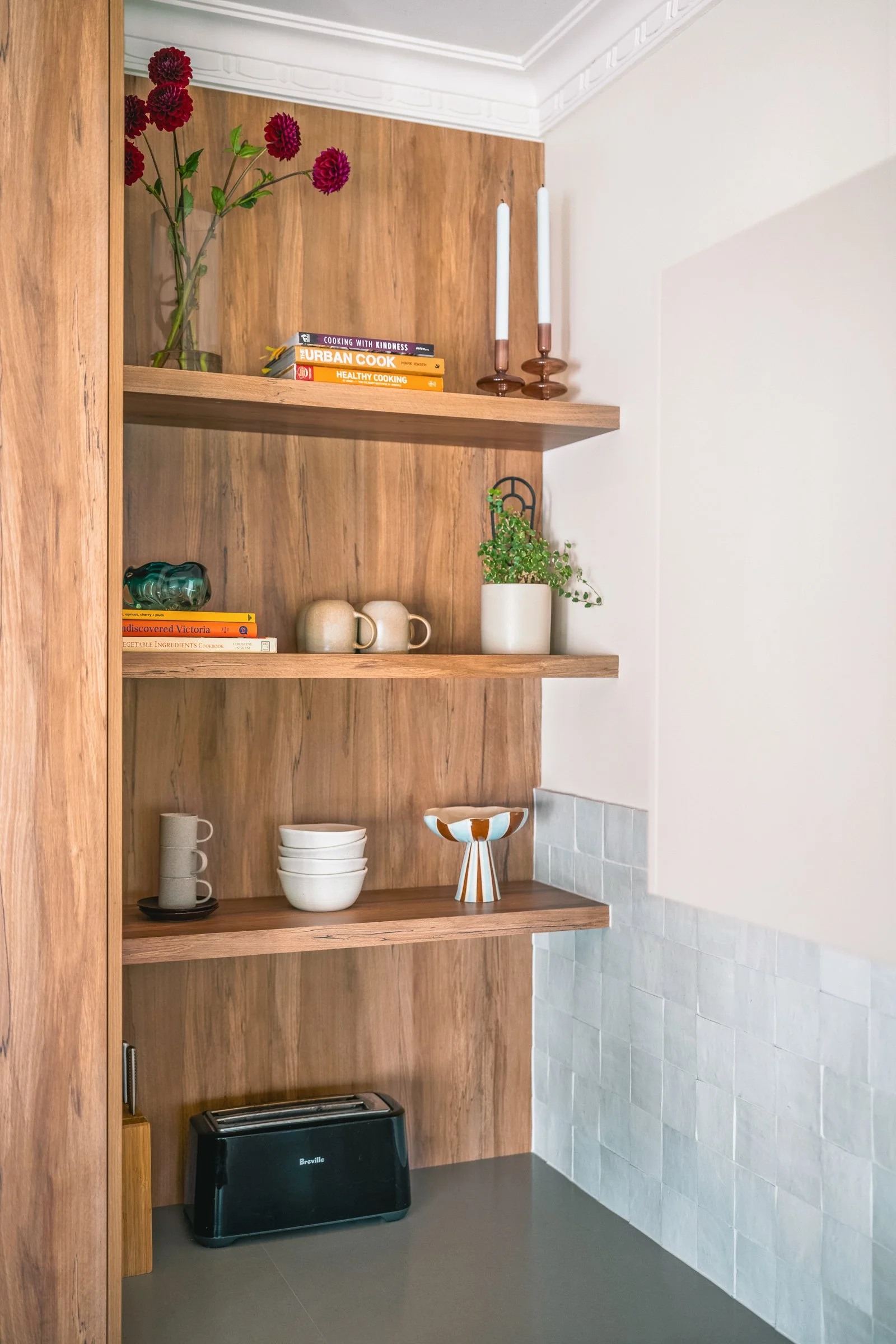
BLAZEY’S floating timber shelves provide practical everyday storage, but they also create a place for objects, colour and personality.
Maximal design is curated, not cluttered
One of the biggest misconceptions about maximalism is that it means visual chaos.
In reality, a successful maximal kitchen requires discipline. The palette may be bold and the materials richly layered, but the composition still needs balance.
In BURGESS, the homeowners were replacing a plain white kitchen that had served them for around 20 years. This time, they wanted the room to make a statement. Deep black cabinetry with a hand-applied textured finish creates depth, while silver hardware connects with accents elsewhere in the home. Calacatta stone introduces a silvery vein that sits comfortably beside the hardwood floor.
There is plenty to appreciate, but nothing feels accidental. Integrated appliances and a clad bulkhead keep the main cabinetry sleek, allowing the texture, stone and double layer of lighting to create the atmosphere.
ROCHESTER takes a softer approach. Painted Shaker cabinetry is combined with timber, reeded glass, textured gold handles and Dekton surfaces. Each layer adds warmth and interest without competing for attention.
The benefit of this kind of design is individuality. Instead of relying on one safe finish throughout, the kitchen becomes a composition of materials that reflects the homeowners and the character of their home.
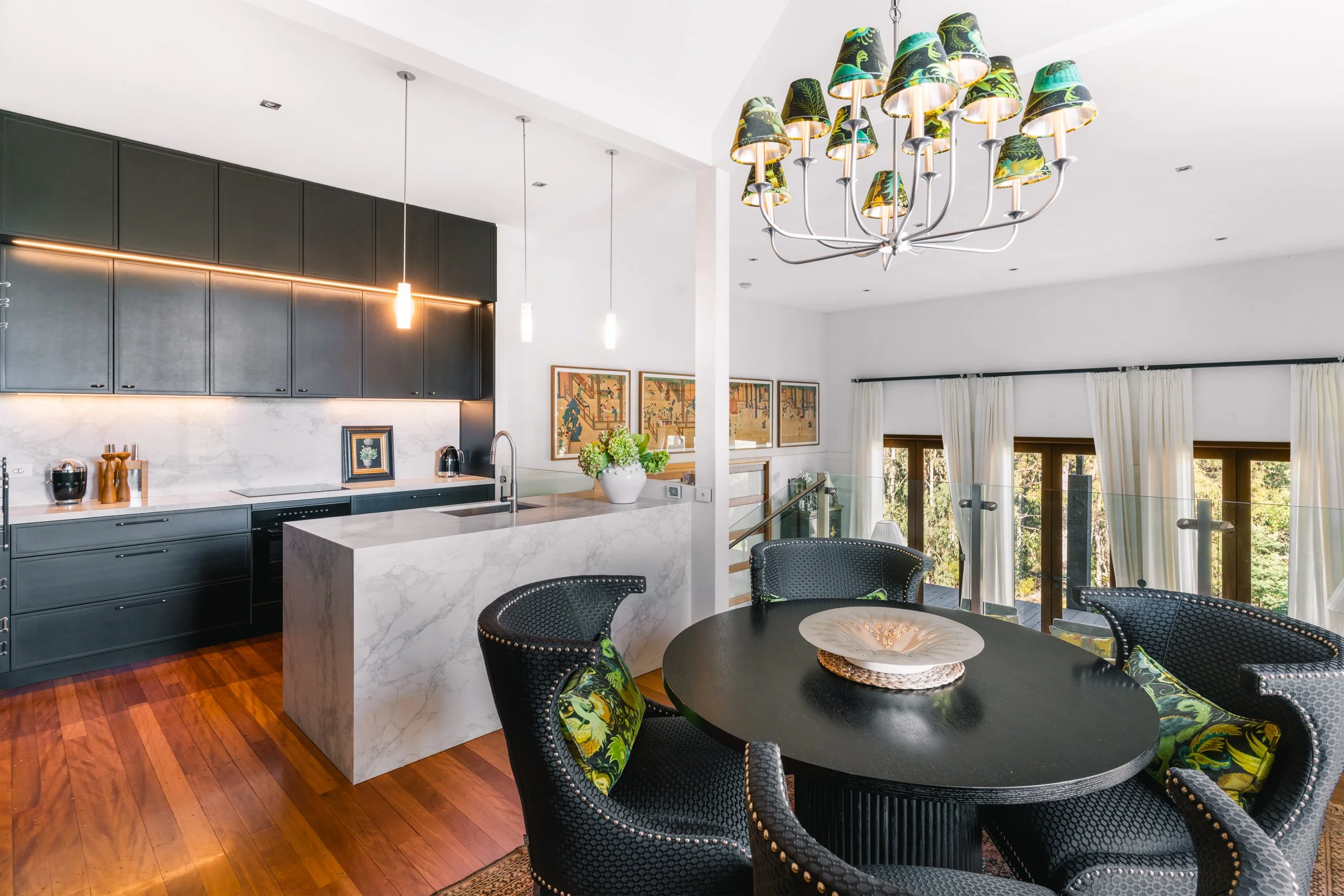
In BURGESS, deep black cabinetry with a hand-applied textured finish creates depth, while silver hardware connects with accents elsewhere in the home. Calacatta stone introduces a silvery vein that sits comfortably beside the hardwood floor.
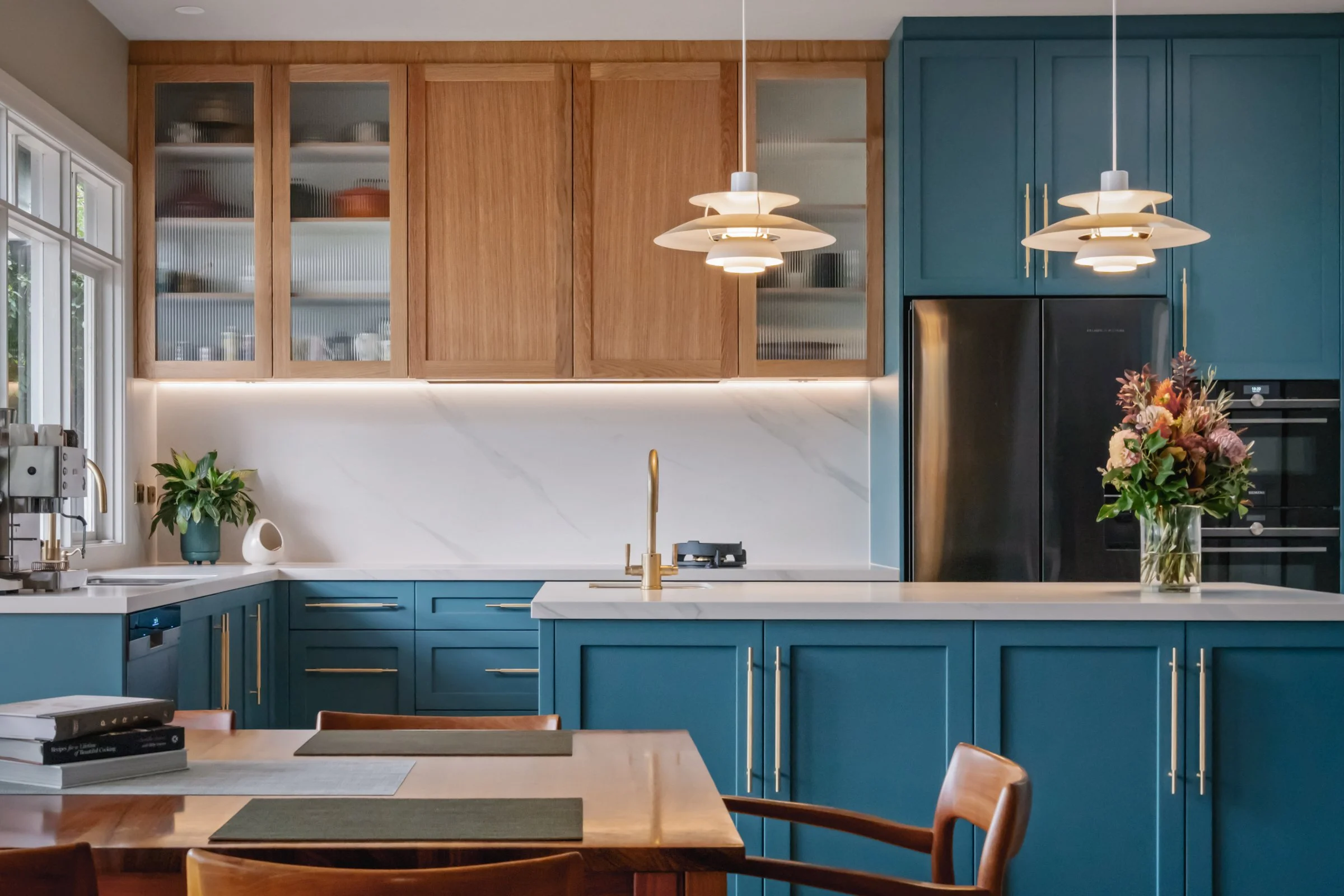
In ROCHESTER , each layer adds warmth and interest without competing for attention: painted Shaker cabinetry is combined with timber, reeded glass, textured gold handles and Dekton surfaces.
Celebrate craftsmanship and history
A maximal kitchen gives detailed workmanship a central role.
In RYE, that craftsmanship is inseparable from the story of the kitchen itself. The clients first worked with Smith & Smith in 2012 and loved the result so much that they recreated much of its floor plan when building another home in 2021. After that home was tragically destroyed by fire, they returned once more to rebuild the kitchen they cherished.
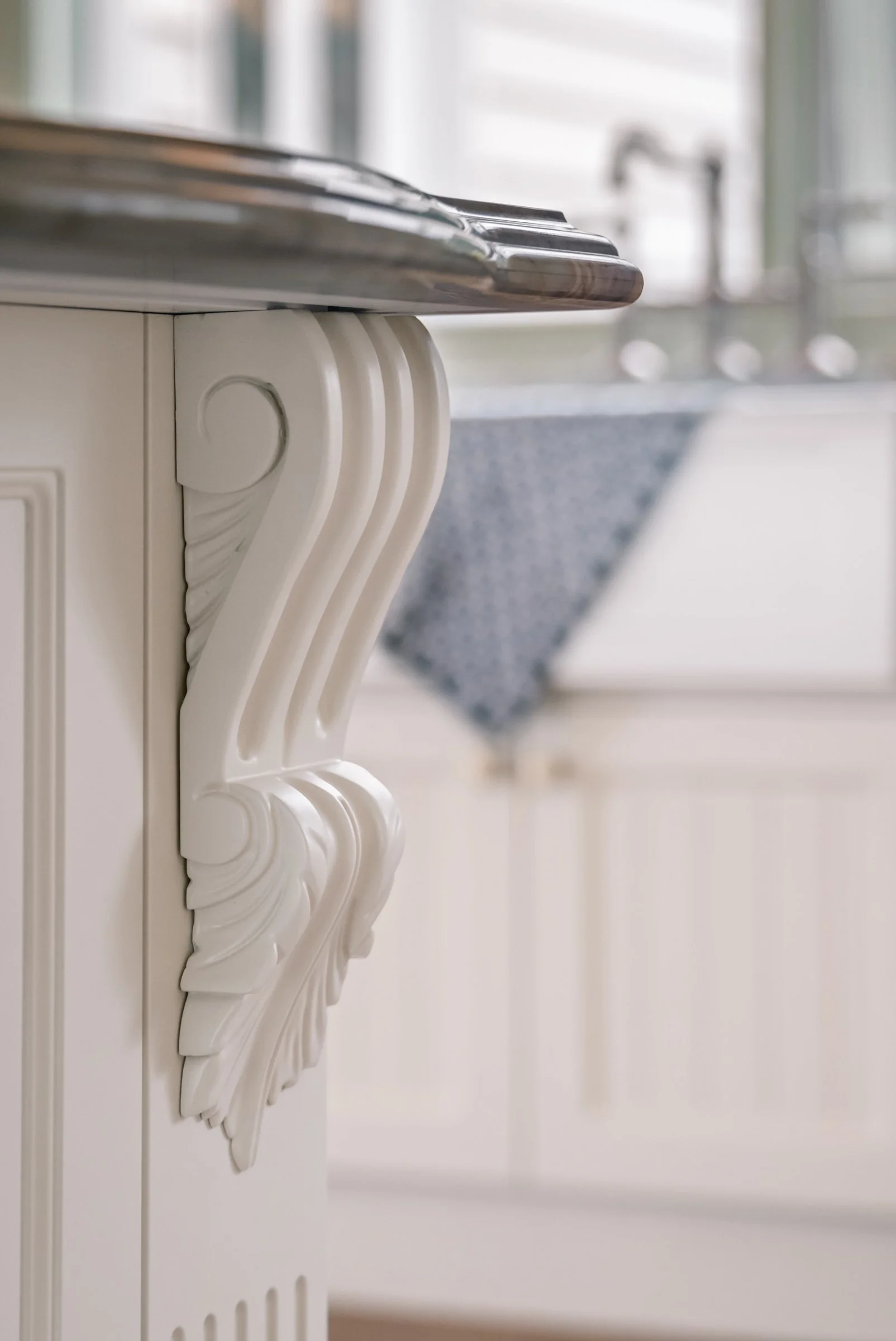
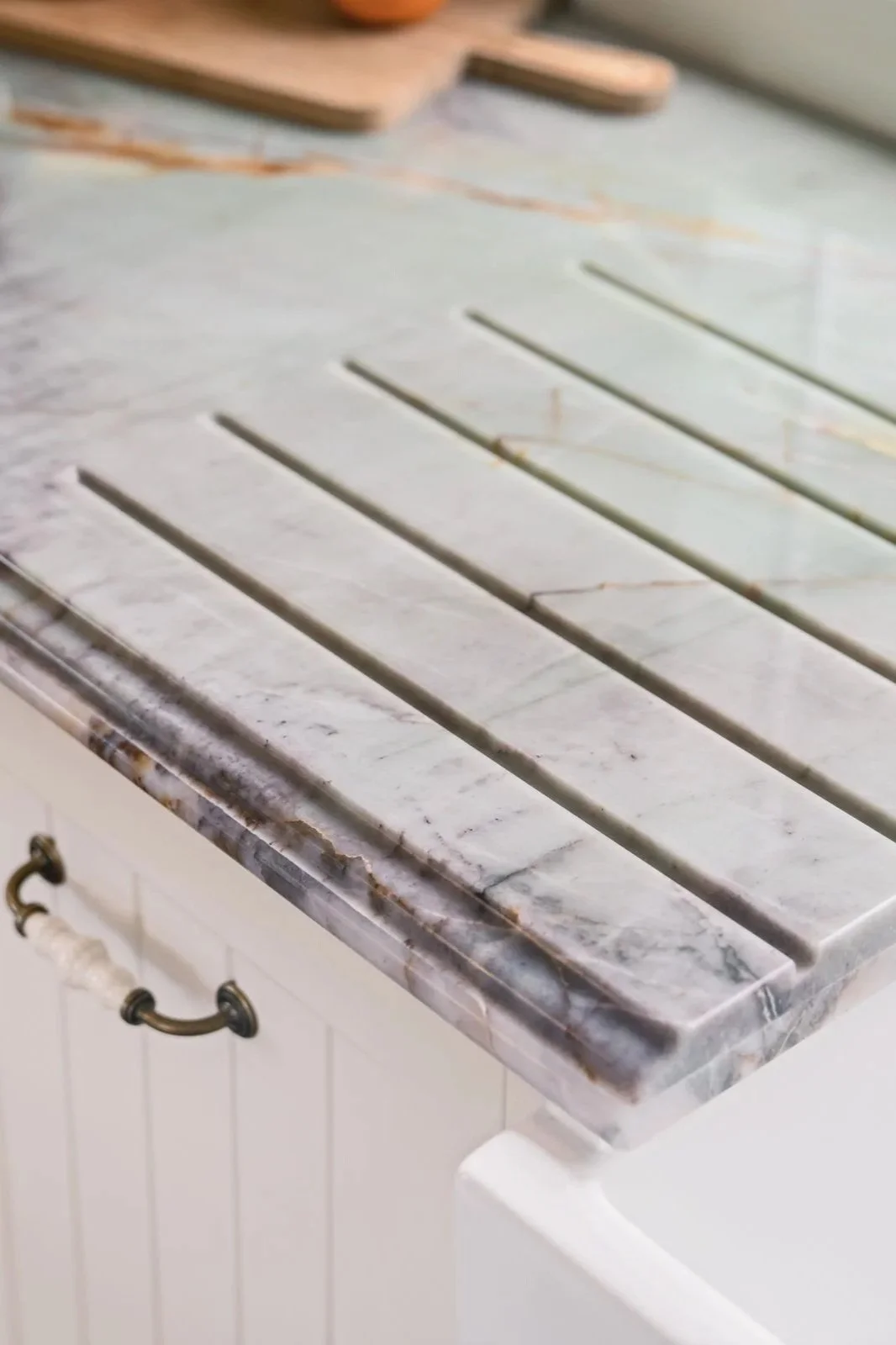
The design embraces all the hallmarks of an authentic country kitchen: a statement mantle, butler’s sink, double-bullnosed natural stone benchtops, pressed-metal splashbacks, turned legs, fluted columns, ornate corbels and dentil capping. A large plate rack and colonial glass cabinetry provide room to display treasured pieces.
These details are not simply decorative. Together, they create familiarity, warmth and a sense of permanence.
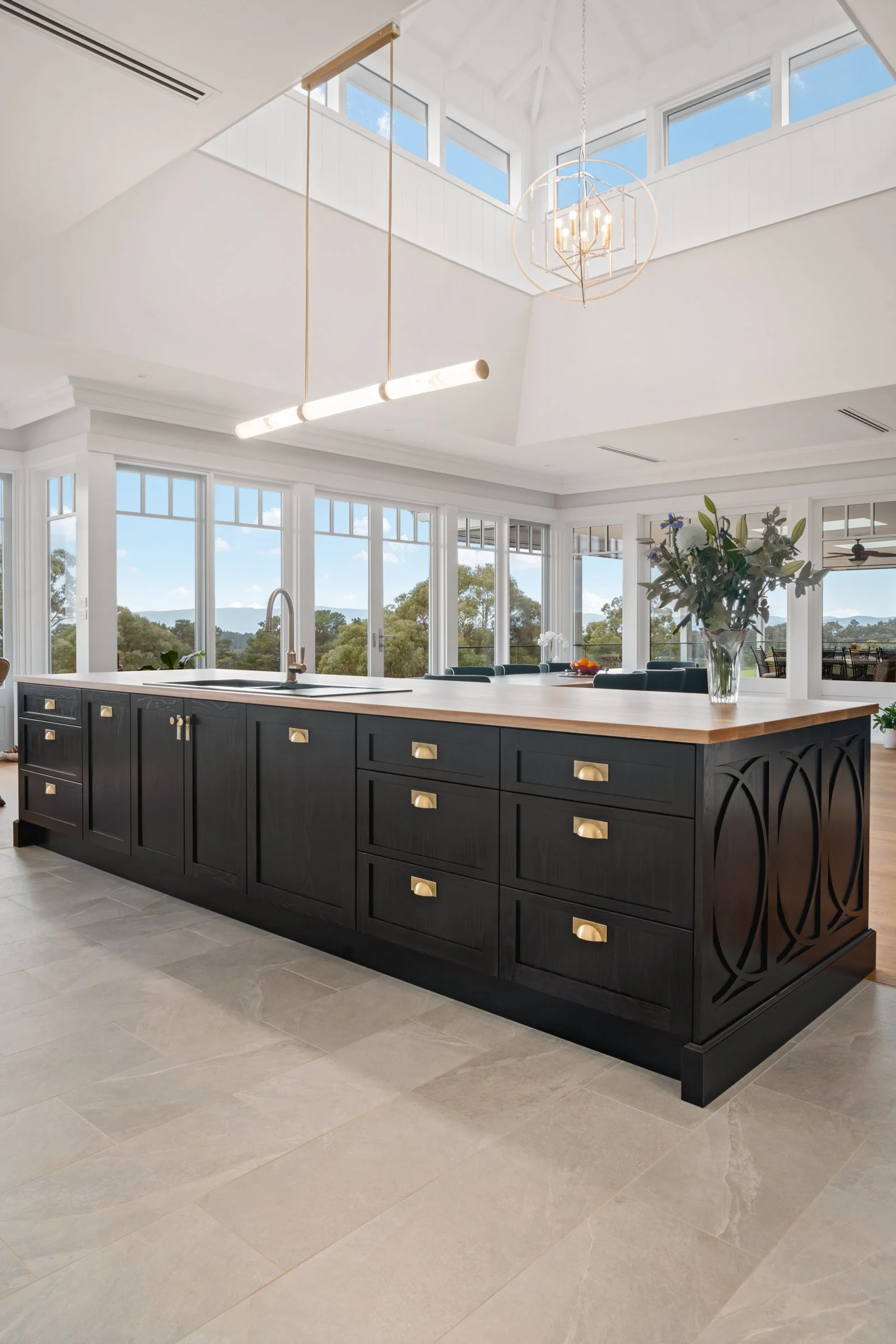
BARNES expresses craftsmanship differently. Custom crossbuck doors and a bespoke mantle bring handcrafted character to the room, while symmetry across the cabinetry and lighting introduces a subtle Art Deco influence. Japan Black American Oak, two-pack finishes and stone surfaces give the kitchen weight and presence.
For homeowners who appreciate detail, maximal design offers something minimalism may not: the pleasure of discovering the room slowly. Mouldings, textures, hardware and custom joinery continue to reward attention long after the renovation is complete.
Layer materials to create atmosphere
Materials do more than finish a kitchen. They establish how the room feels.
BOURNE is anchored by dramatic Super White Dolomite, selected for its movement and sculptural quality. The stone’s veining was carefully aligned so the island appears to have been carved from a single block. Satin cabinetry in Dulux Night Sky deepens the contrast, while touchless dimmable lighting adds warmth and flexibility.
This is maximalism expressed through theatre rather than ornament. The stone is the visual event, but supporting elements such as batten-style cabinetry, under-stair wine storage and the connection to the alfresco area allow that drama to continue through the home.
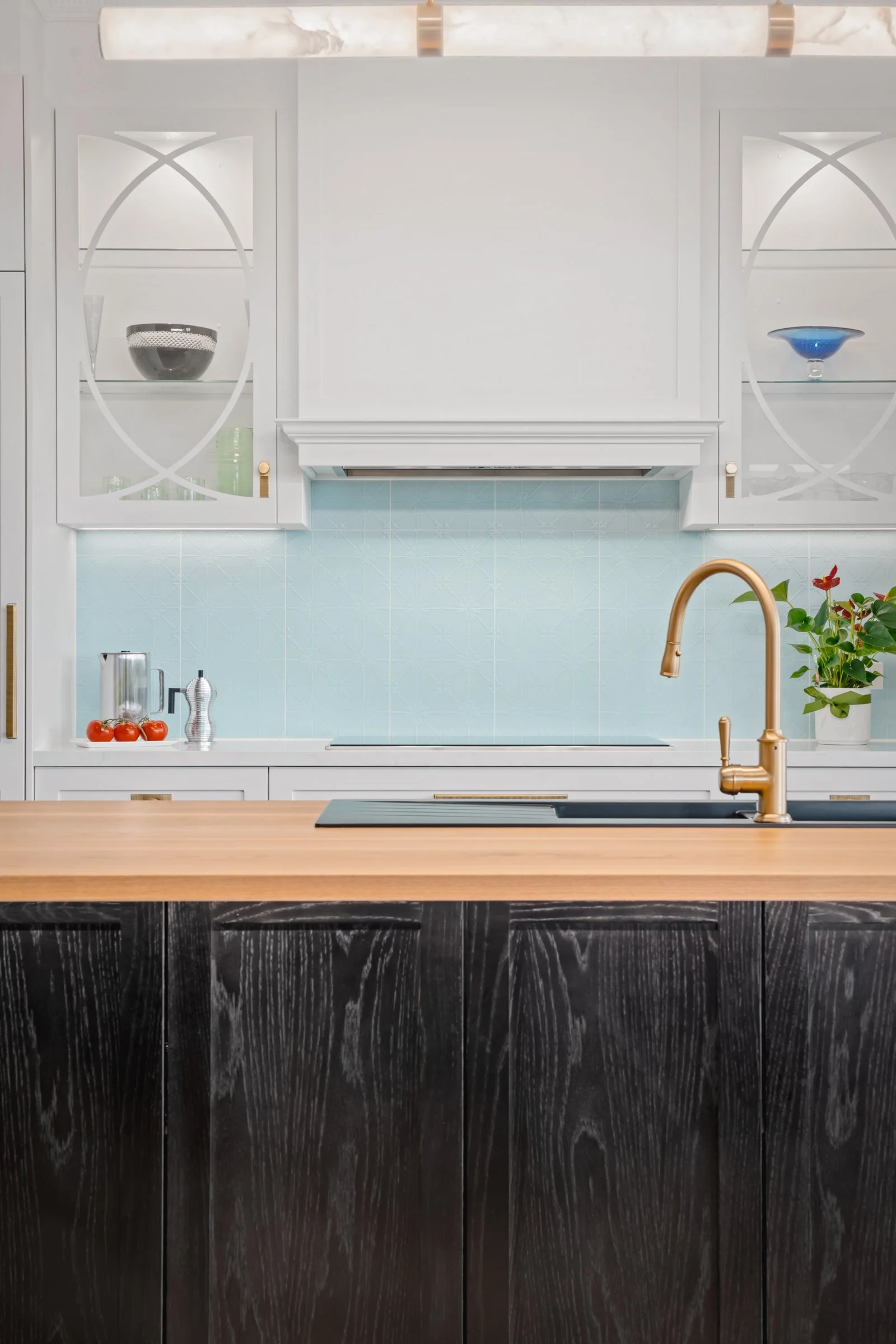
BURGESS also demonstrates the emotional value of texture. Its hand-applied black two-pack finish softens the dark cabinetry almost like velvet. The surface is less something that immediately announces itself and more something that is gradually felt.
The advantage of layered materials is atmosphere. A richer palette can make a kitchen feel intimate, sophisticated, grounded or dramatic. Rather than receding into the background, the kitchen becomes part of the experience of the home.
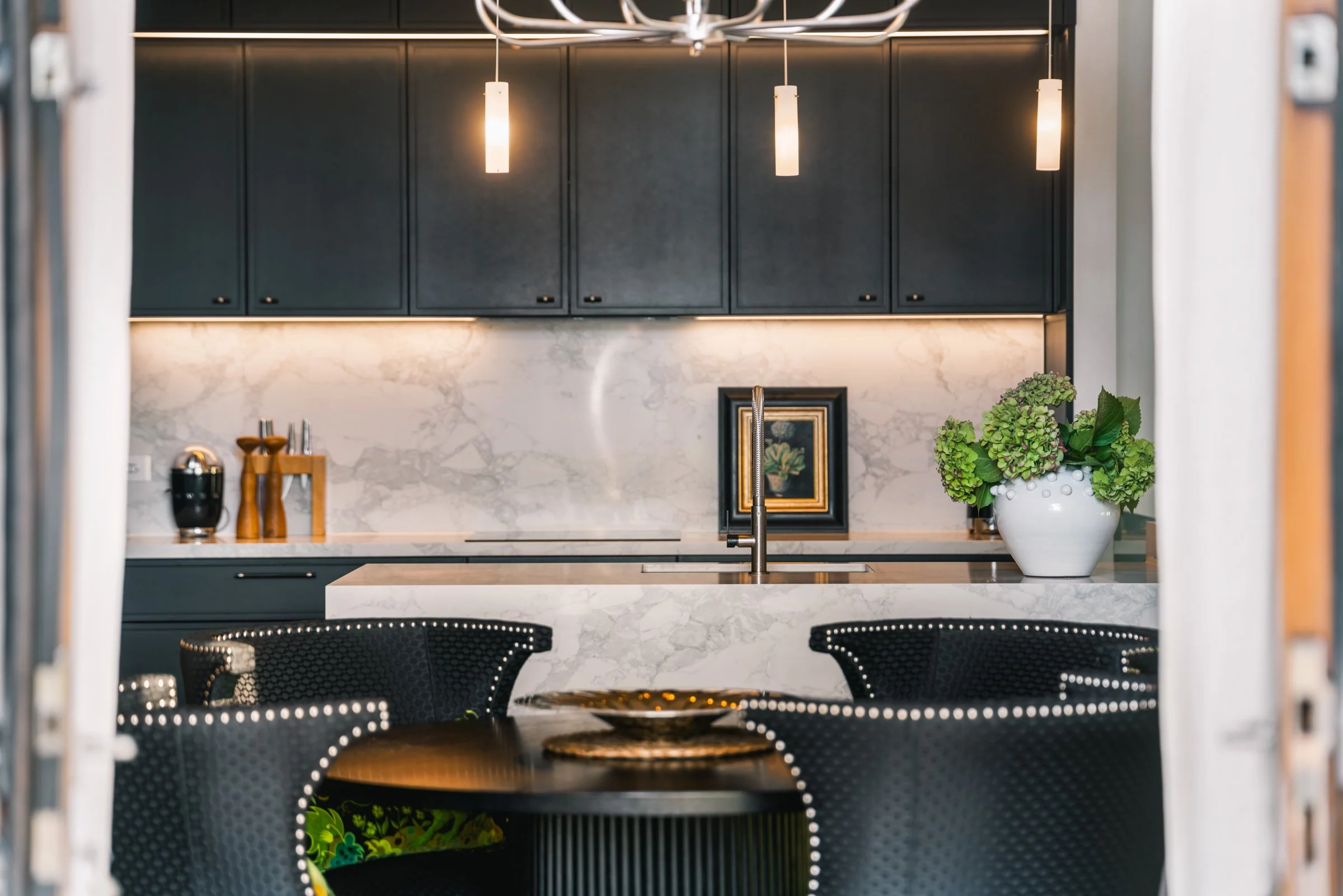
BURGESS demonstrates the emotional value of texture.
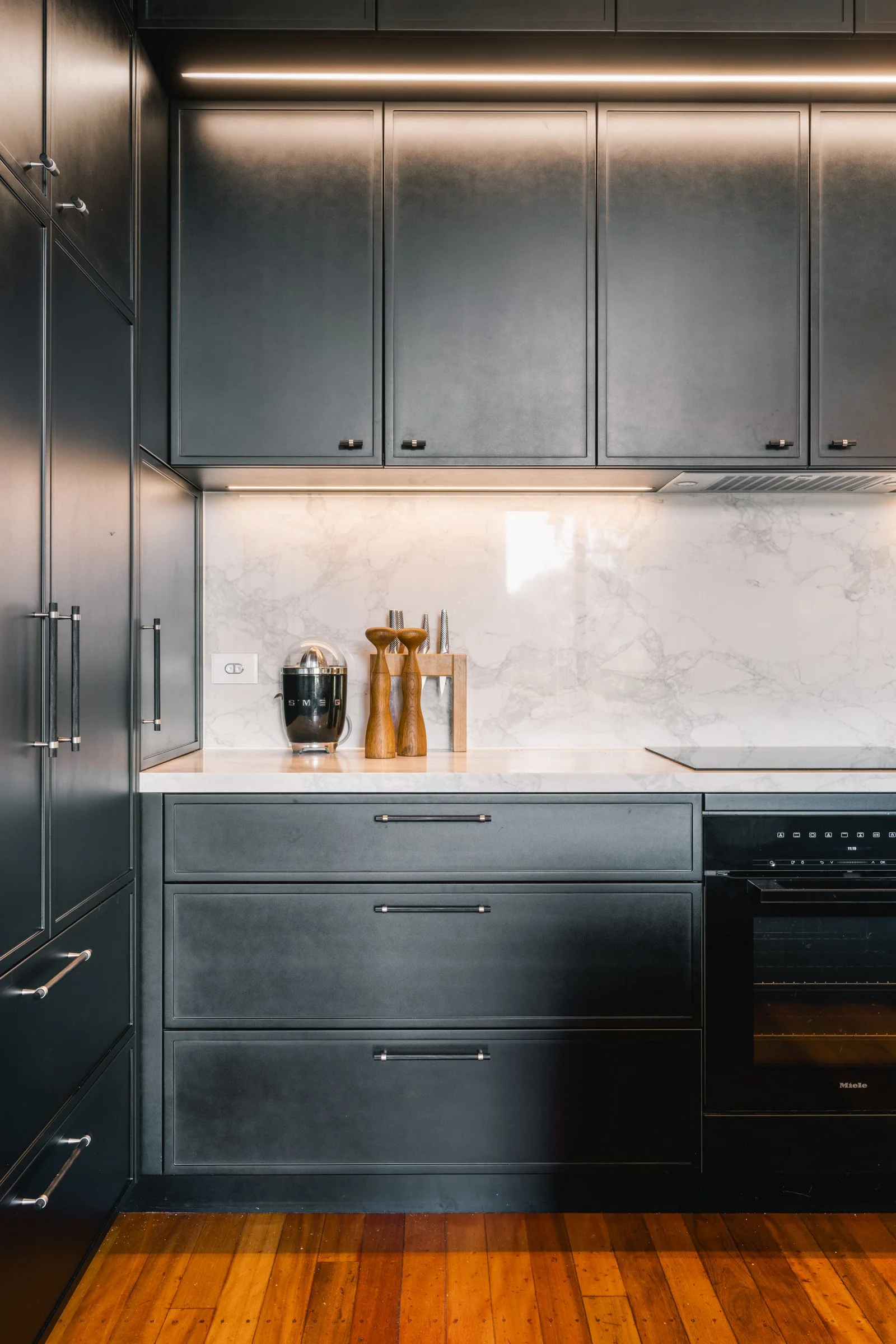
BURGESS’ hand-applied black two-pack finish softens the dark cabinetry almost like velvet.
Design with generosity
Maximal design is not only about how much the eye can see. It can also be about how generously a home supports cooking, gathering and entertaining.
HARLOW features the unusual luxury of two kitchens within the one home. The main kitchen is designed as an elegant entertaining space, with warm-white Shaker cabinetry, subtle corbels, gold hardware and pale stone. Behind the archway, an old laundry was transformed into a fully functioning second kitchen, complete with an additional oven, gas cooktop, bulk storage and generous preparation space. Messier cooking can happen out of sight, allowing the main kitchen to remain composed when family and friends gather.
BURGESS also includes two kitchens, although in a very different configuration. Its dramatic black statement kitchen belongs to the main home, while a separate kitchen serves the adjoining granny flat. Far from being an afterthought, the granny flat kitchen has become another valuable entertaining space. The homeowners often use it when hosting dinner because it sits beside a generous table with room for guests to gather comfortably. The two kitchens serve separate residences, but together they give the property greater flexibility in the way it accommodates everyday life, extended family and social occasions.
BARNES extends this sense of abundance through a substantial butler’s pantry containing three ovens, a second dishwasher, extensive appliance cabinetry, vegetable baskets and dedicated food storage. It gives the homeowners the capacity to bake, prepare and entertain on a large scale without crowding the main kitchen.
This is maximalism expressed as generosity: more preparation space, more cooking options, more storage and more ways to bring people together.
For households that entertain frequently, accommodate extended family or simply want different spaces for different modes of living, this additional capacity is not excess for its own sake. It allows the home to respond more easily—and more graciously—to the way people actually live.
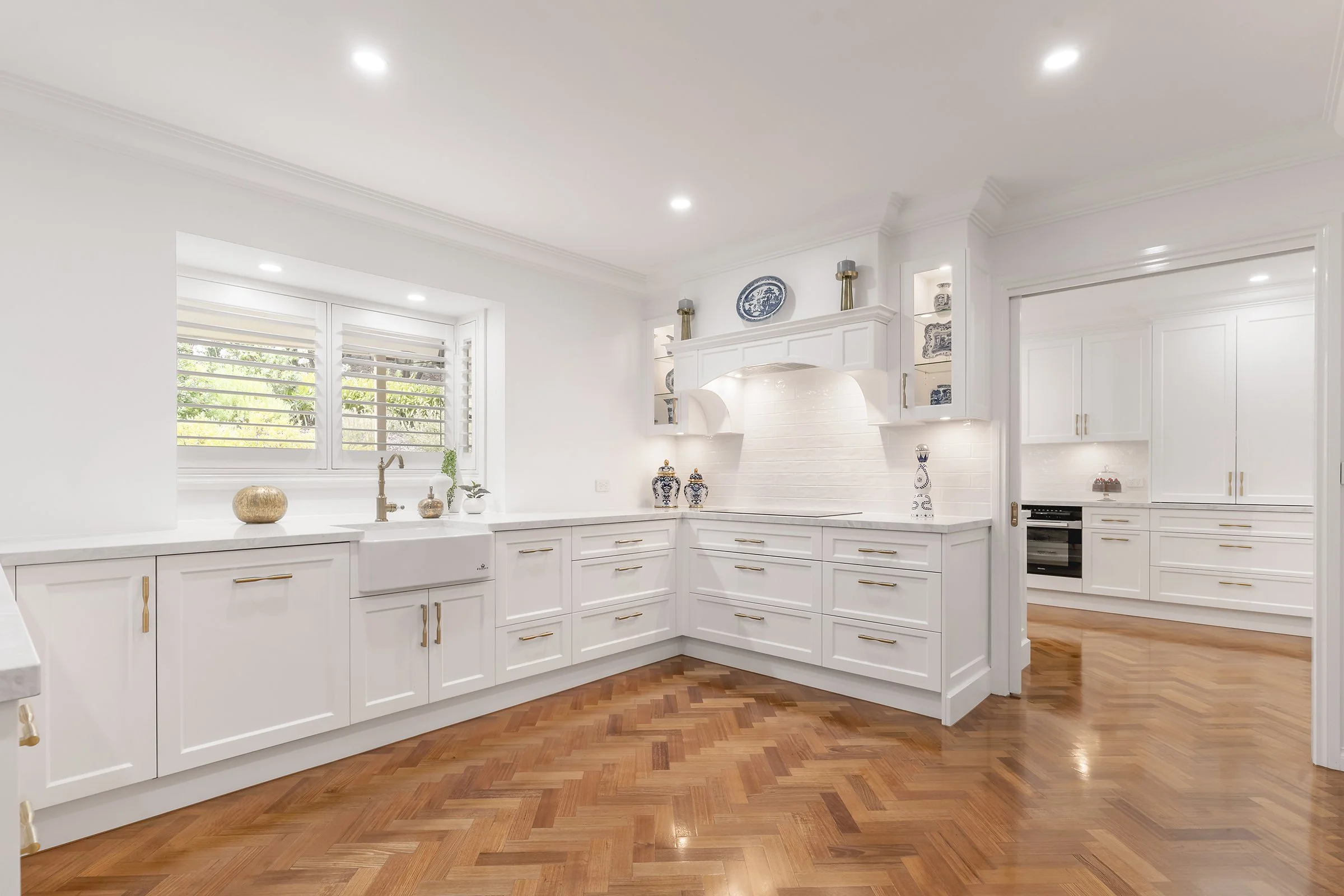
HARLOW features the unusual luxury of two kitchens within the one home.
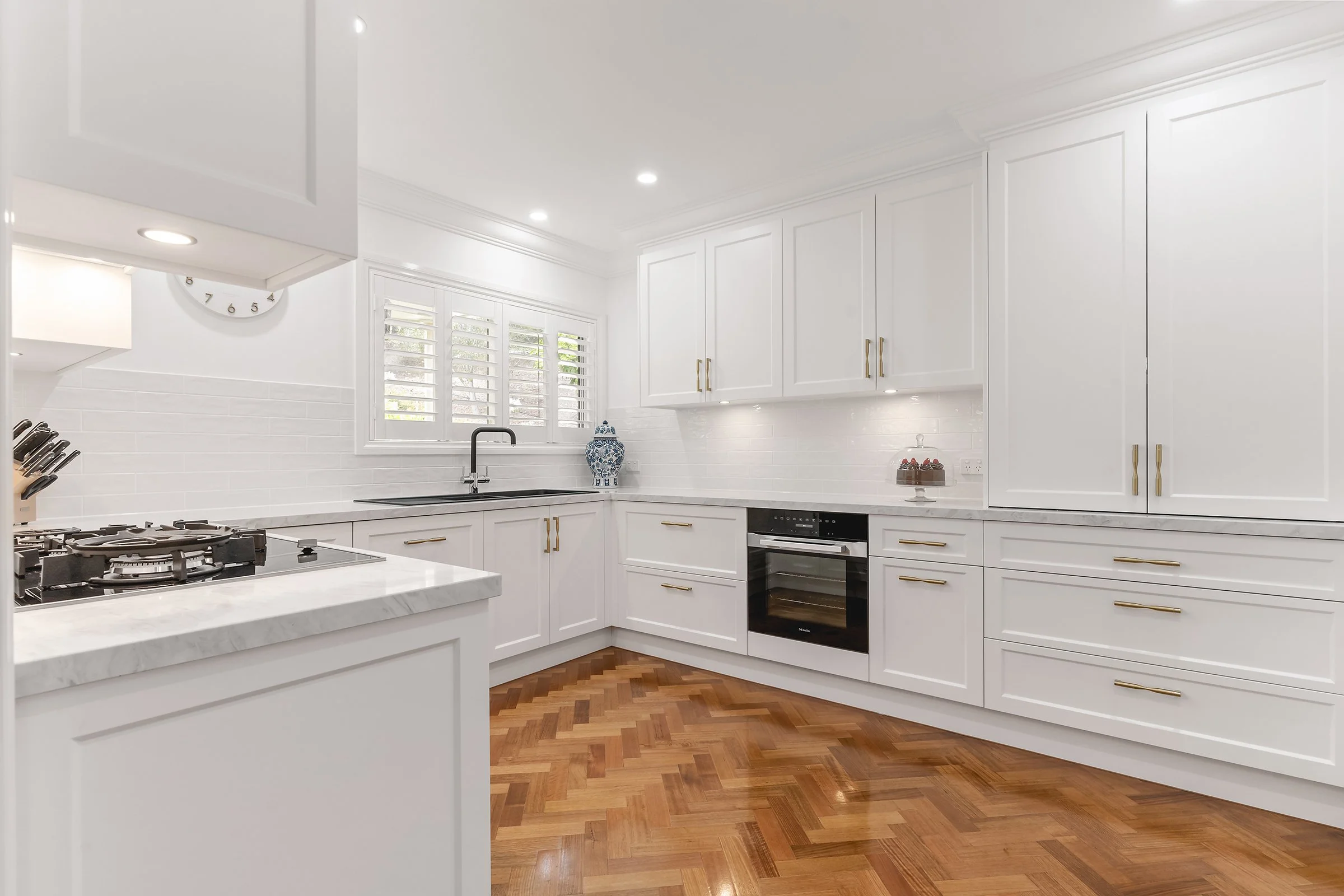
… Behind the archway, an old laundry was transformed into HARLOW’S fully functioning second kitchen
Put meaningful things on display
Minimal kitchens often conceal. Maximal kitchens can make display part of the architecture.
RYE’s plate rack and colonial glass doors give cherished pieces a permanent place within the room. They are not treated as clutter to be hidden, but as part of the kitchen’s character.
In ROCHESTER , reeded glass performs a subtler version of the same role. It introduces depth and movement while gently obscuring the contents behind it. The effect is layered rather than exposed.
BOURNE turns display into a dramatic architectural moment through illuminated wine storage beneath the stairs. What may otherwise have been an awkward or unused area becomes a feature connecting the kitchen’s visual impact with the homeowners’ approach to entertaining.
Display works best when it is selective. A maximal kitchen does not need everything to be visible. It creates considered places for the objects, collections and rituals that matter most.
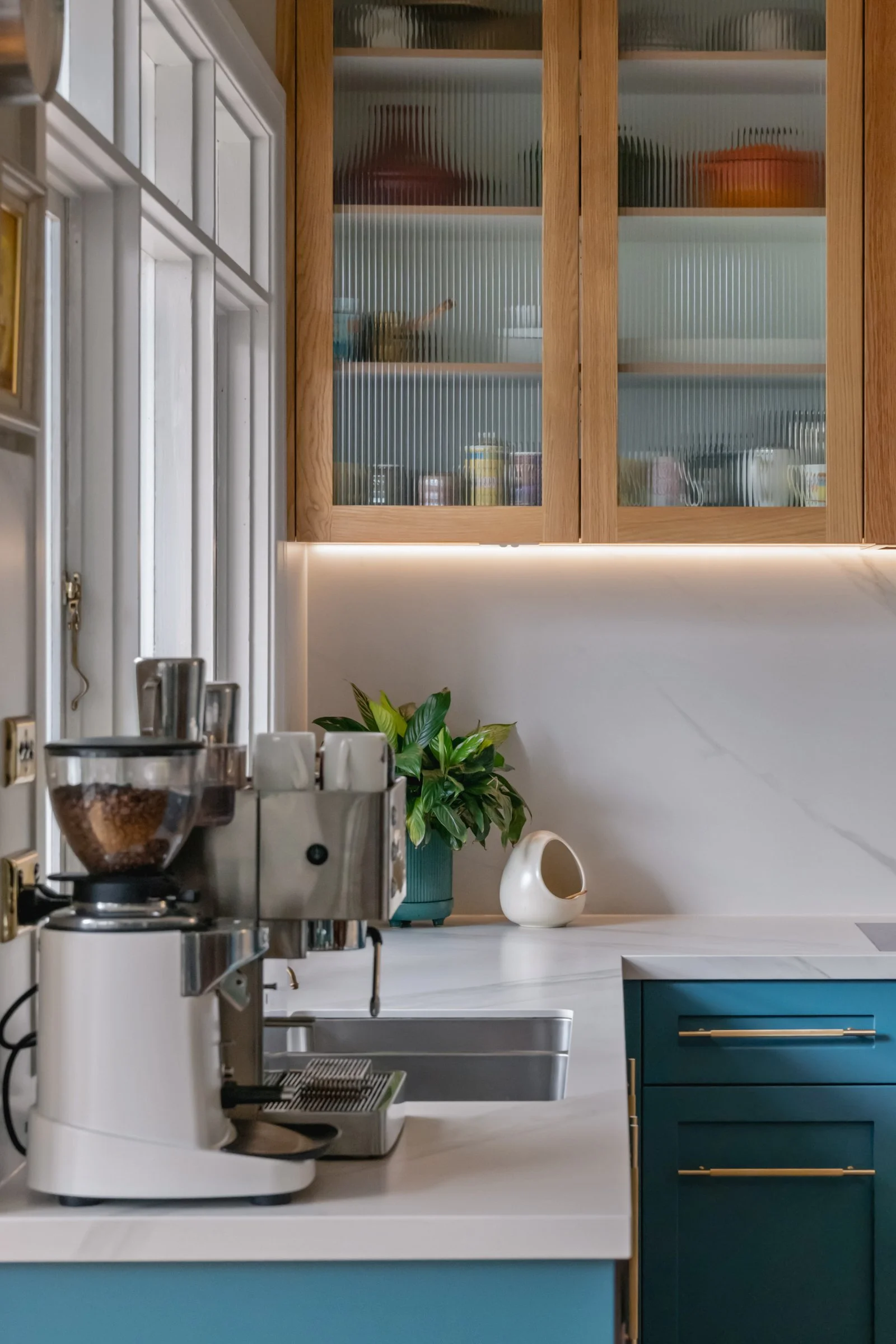
In ROCHESTER , reeded glass introduces depth and movement while gently obscuring the contents behind it.
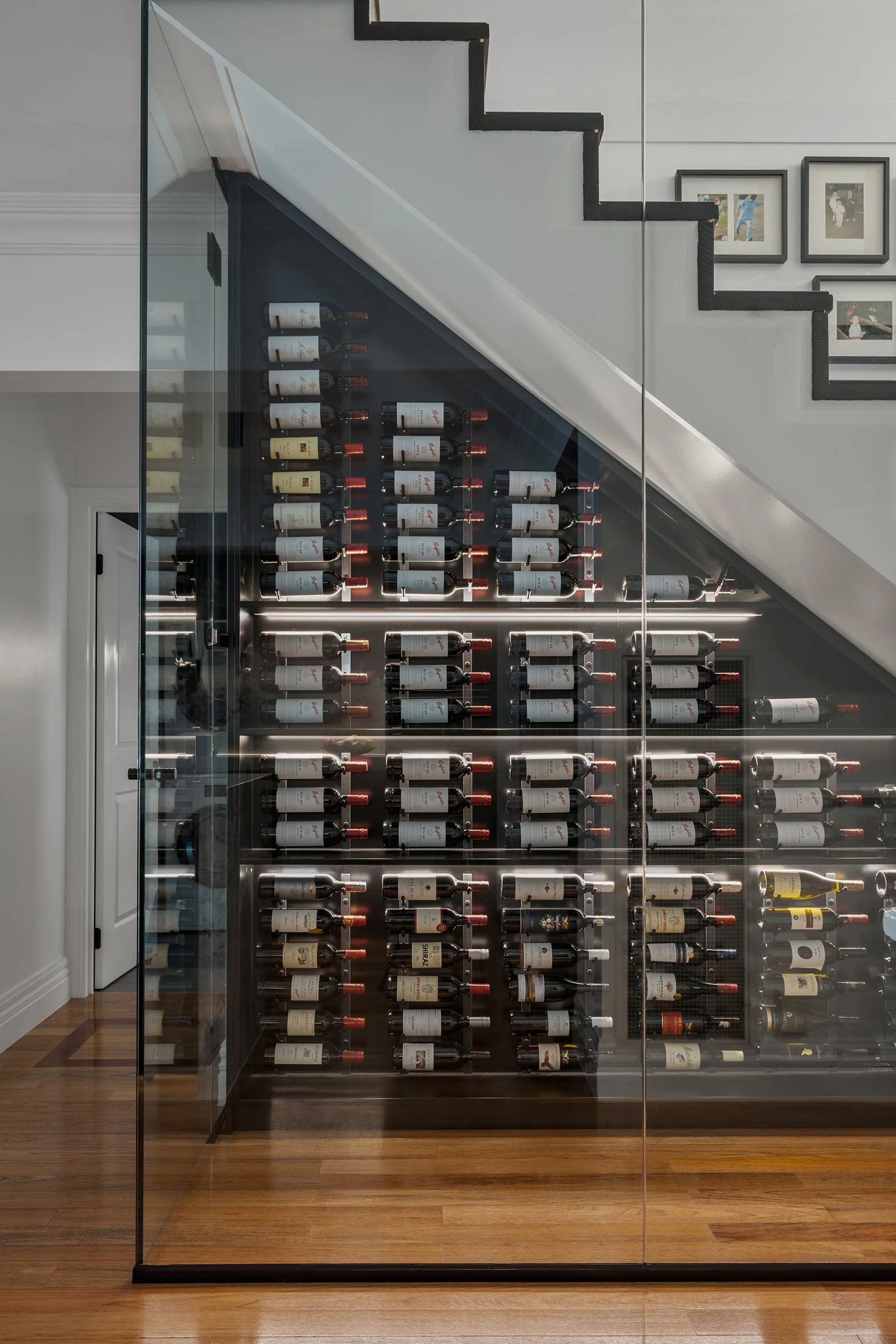
BOURNE turns display into a dramatic architectural moment through illuminated wine storage beneath the stairs.
How a maximal kitchen feels to live in
A successful maximal kitchen feels expressive rather than busy.
It may carry the familiarity of a country home, the mood of a favourite restaurant, the craftsmanship of a bespoke piece of furniture or the sense of occasion that comes from gathering a large family around food.
The practical work still matters. RYE includes multiple preparation zones, a scullery, a concealed bar and three sinks. ROCHESTER places trays, spices, chopping boards and cutlery exactly where they are used. BURGESS hides substantial storage behind a refined elevation. BOURNE conceals its breakfast station and small appliances behind pocket doors.
The difference is that function is not the only story being told.
These kitchens support daily routines while also creating delight. They offer more colour, more tactility, more personal references and more opportunities for the homeowners’ taste to shape the room.
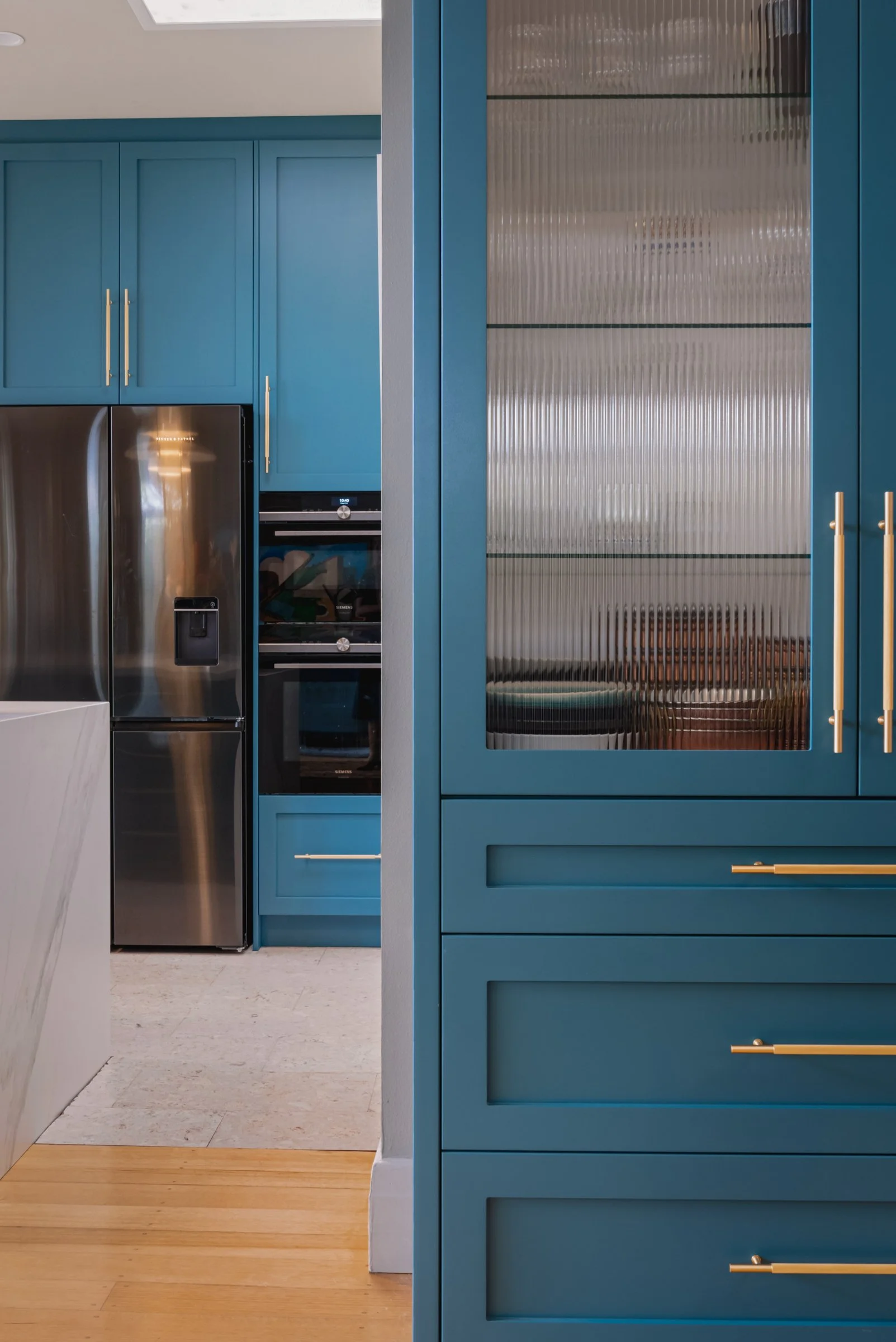
ROCHESTER places trays, spices, chopping boards and cutlery exactly where they are used.
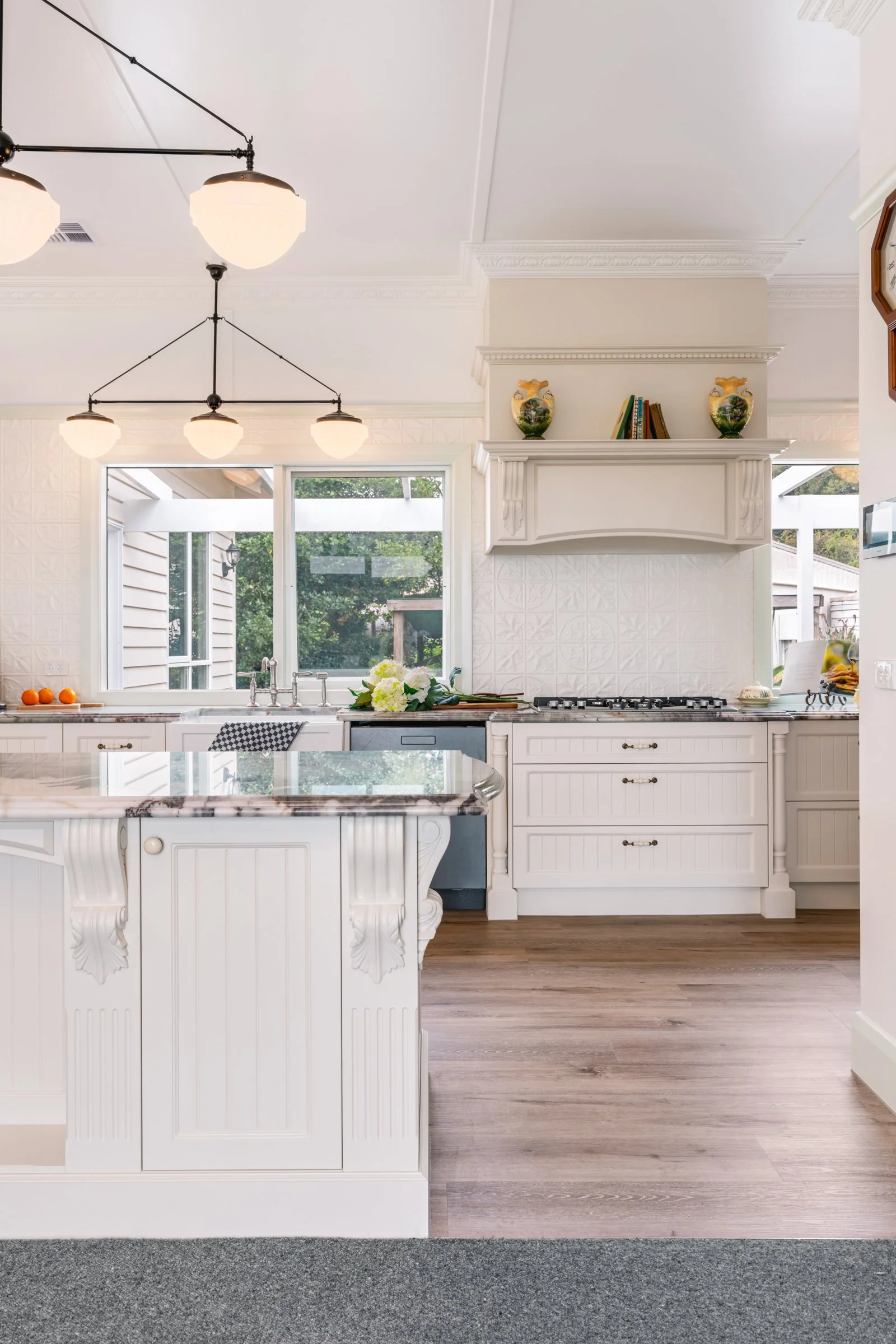
RYE includes multiple preparation zones, a scullery, a concealed bar and three sinks.
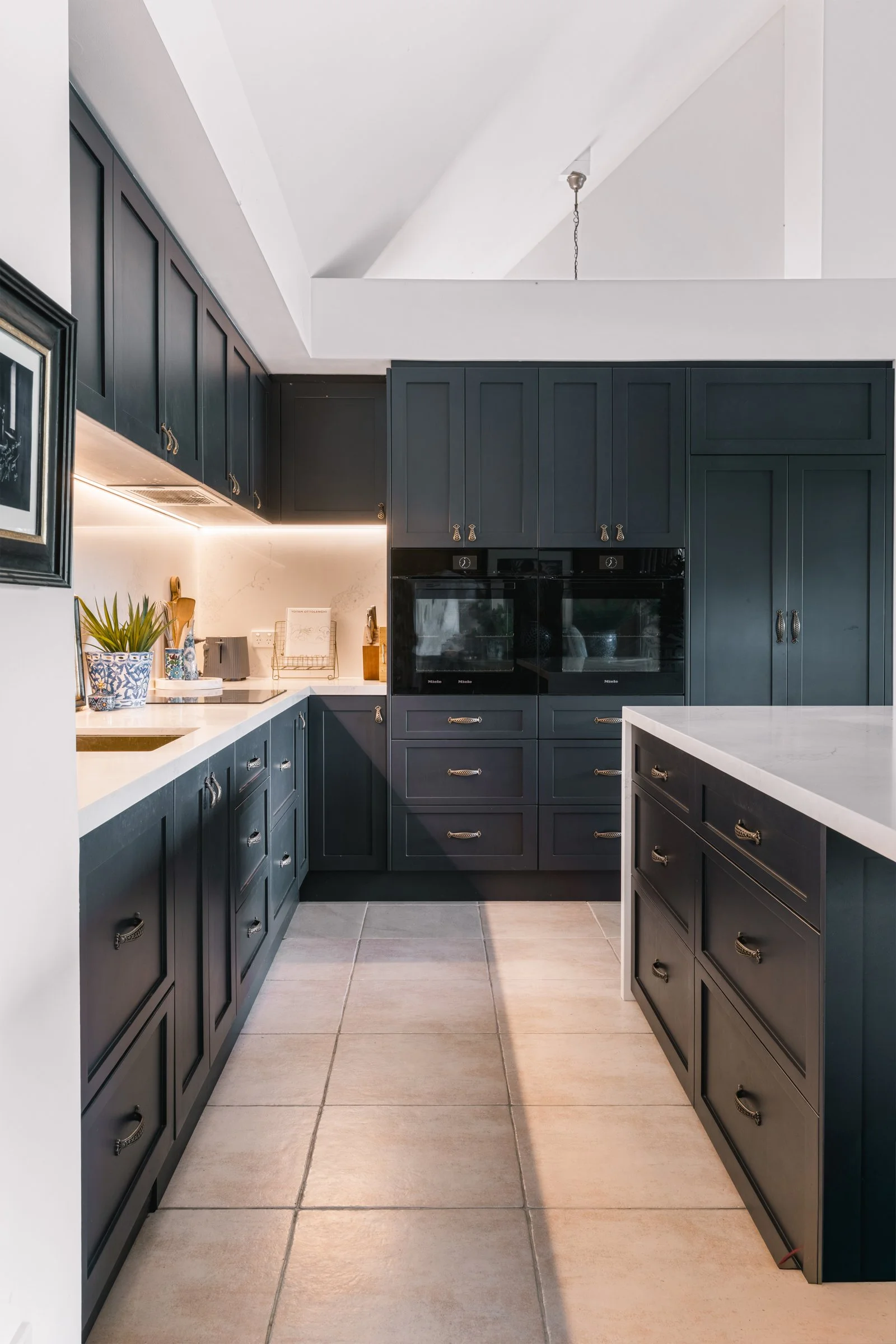
BURGESS hides substantial storage behind a refined elevation.
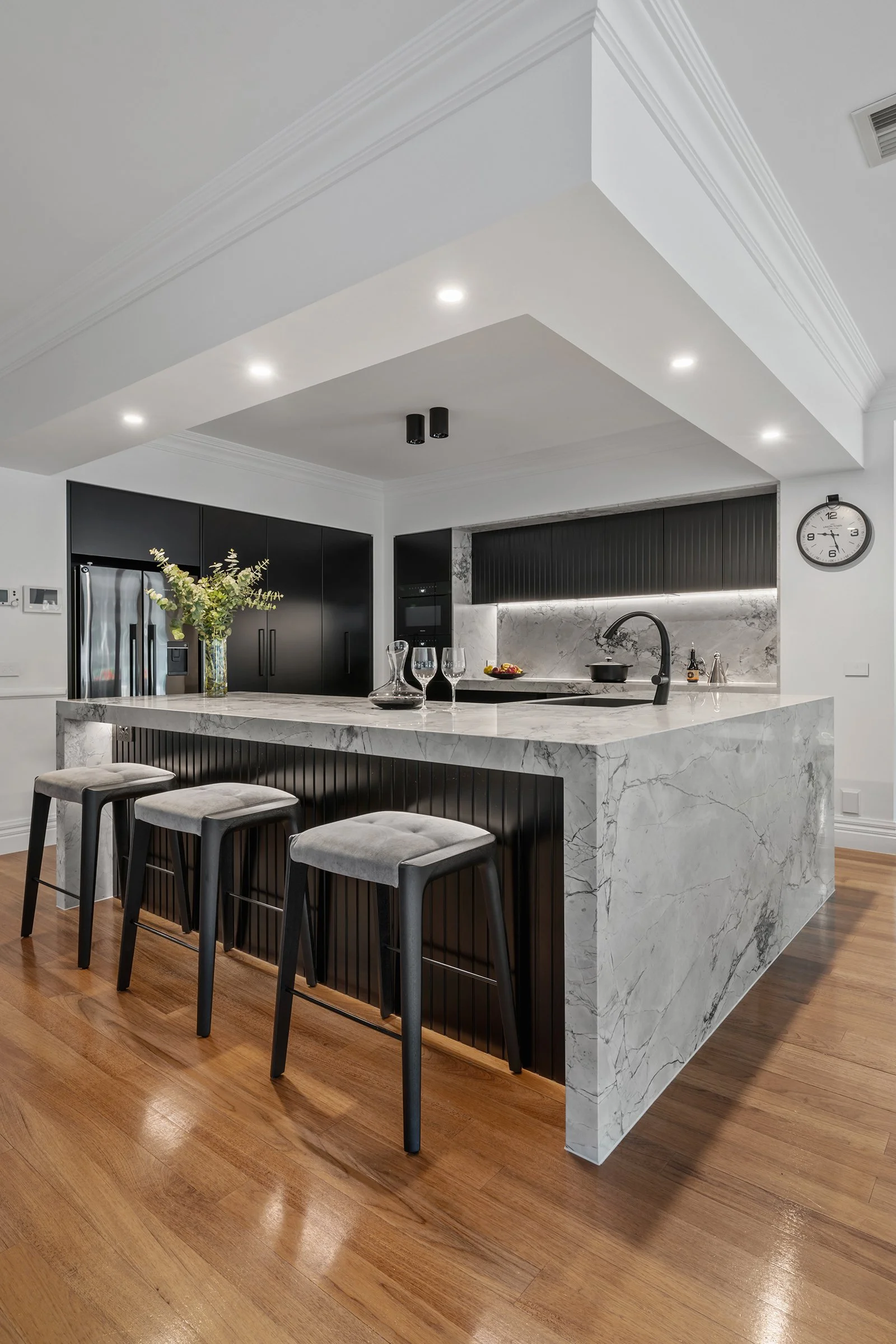
BOURNE conceals its breakfast station and small appliances behind pocket doors.
Why choose maximal over minimal?
A minimal kitchen may be right when the goal is visual quiet, restraint and a room that recedes gently into an open-plan home.
A maximal kitchen may be the better choice when you want the kitchen to express more.
More character. More craftsmanship. More atmosphere. More capacity for entertaining. More connection to the history of the home and the personality of the people living there.
The decision is not really between “less” and “more”. It is between two different ways of creating order.
Minimalism carefully edits. Maximalism carefully curates.
When colour, material, display and detail are composed with purpose, a maximal kitchen does not overwhelm the home. It gives the home a stronger sense of identity.
If you are drawn to layered materials, bespoke details or rooms that reveal something new each time you enter them, it may help to ask: what parts of our personality and way of living do we want this kitchen to celebrate?
That question is often where a truly individual design begins.
Are you learning more ‘max’ than ‘min’? Speak to a member of our award-winning team to find a design solution that works for how your family likes to live.
If you missed last month’s article in The Smith’s Journal, we explored the features and benefits of minimal kitchen design.